
Incentive travel is the most effective reward type for driving engagement, performance and business results, according to new research from the Incentive Research Foundation (IRF).
The 2026 European Top Performers Study found that leading organisations across Europe are using incentive travel as a strategic tool, rather than a perk, to drive measurable outcomes across sales, retention and customer loyalty.
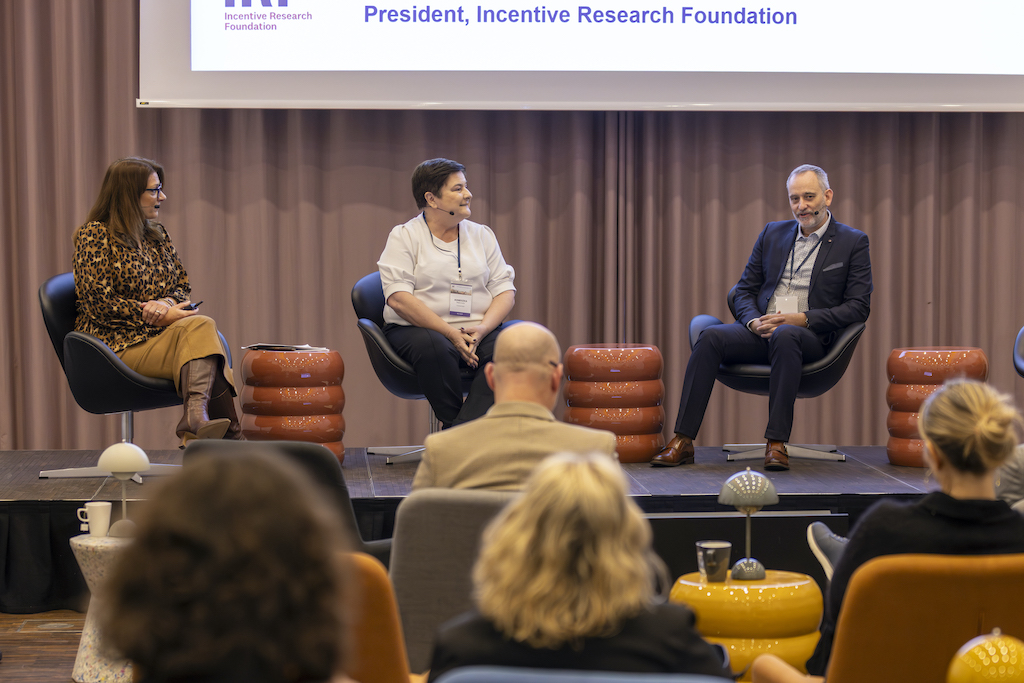
micebook was given an early look at the research at the IRF European Thought Leader Summit in Copenhagen in February, with the full report now published.
“The study reveals how leading European organisations use incentive travel, said Stephanie Harris, president of the Incentive Research Foundation. “These findings help programme owners strengthen strategy, improve design and increase the business impact of incentive travel.”
The research analysed 450 companies across sectors including technology, financial services and manufacturing, with just 25% classified as “top performers” based on metrics such as revenue growth, customer expansion and talent retention.
Top performers see stronger business impact
The study found a clear gap between high-performing organisations and their peers when it comes to the perceived value of incentive travel. Among top performers, 58% strongly agree that incentive travel contributes to overall business performance, compared to 35% of other companies.
More than half (53%) also strongly agree that incentive travel drives engagement and retention, significantly higher than comparator organisations.
The findings reinforce the growing view that incentive travel is a core business tool, particularly in sectors such as technology and financial services.
Smaller groups, bigger rewards
Top-performing organisations are also taking a more focused approach to programme design. On average, only 20% of participants qualify for incentive trips, compared to 26% in other companies, with higher investment per person.
Average reward value for top performers is €5,564 per person, rising to more than €13,000 for top-tier trips, significantly higher than comparator organisations.
This approach reflects a shift towards exclusivity and high-impact experiences, rather than broader, lower-value rewards.
Experience over cost
The research also highlights a clear shift in programme priorities, with top-performing organisations placing greater emphasis on experience and perceived value over cost.
Key design priorities include high perceived value (56%), unique experiences (55%) and flexibility (55%). Cost was significantly less of a priority among top performers, suggesting a stronger focus on long-term impact rather than short-term savings.
Measurement and ROI drive success
A major differentiator between top performers and other organisations is how success is measured. Top-performing companies are significantly more likely to track ROI, customer satisfaction, sales performance and long-term outcomes, with 97% reporting confidence in demonstrating results.
This level of measurement allows incentive travel programmes to be aligned more closely with wider business objectives.
A strategic shift for the industry
The findings come as the events industry continues to position incentive travel as a key driver of engagement and performance.
The IRF said the research highlights how leading organisations are moving beyond traditional reward structures and using incentive travel to support business growth, culture and employee retention.
For planners and suppliers, the report provides further evidence that well-designed incentive programmes can deliver both emotional and commercial value, particularly when aligned with broader organisational goals.