
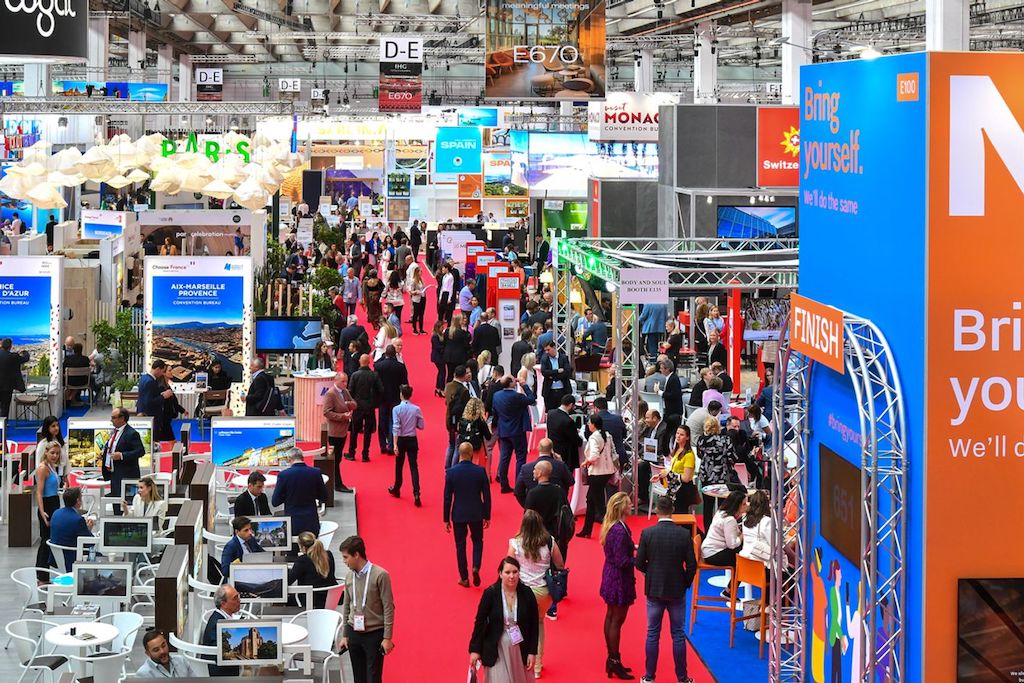
The global business events sector now generates more direct economic activity than industries including aerospace and air transport, according to major new research released by the Events Industry Council in partnership with Oxford Economics.
The 2026 Global Economic Significance of Business Events Study found that business events generated US$1.3 trillion in direct spending worldwide in 2025, surpassing sectors including telecommunications equipment, air transport, textiles and aerospace.
Including direct, indirect and induced impacts, the sector supported US$3.1 trillion in total business sales, US$1.8 trillion in GDP and 24.2 million jobs globally across more than 180 countries.
The report also found that if business events were measured as a national economy, the sector’s total GDP impact would rank it as the world’s 16th largest economy, ahead of countries including Turkey, Indonesia and the Netherlands.
Amy Calvert, president and CEO of EIC, said the findings reinforce the growing strategic importance of business events within the global economy.
“This study gives our industry credible, current data to demonstrate what we have long known: when people gather with purpose, they create economic value, strengthen communities, accelerate knowledge exchange and build the trust required to move ideas into action,” she said.
According to the research, business events attracted 1.65 billion participants globally in 2025, with direct spending increasing 12.2% above 2019 levels. Participants spent an average of US$785 per event, while trade shows alone directly generated US$180 billion in spending.
North America generated the highest level of direct spending at US$488 billion, followed by Asia Pacific at US$353 billion and Western Europe at US$328 billion.
The report also points to a continued recovery in global event activity following the pandemic. By the fourth quarter of 2025, global RFP activity had reached 102% of 2019 levels, while hotel group room nights recovered to 97% of pre-pandemic volumes.
Looking ahead, Oxford Economics forecasts direct business events spending will reach US$1.6 trillion by 2028, supporting more than 10.4 million direct jobs worldwide.
The study also highlighted the broader “catalytic effects” of business events beyond direct economic contribution, including innovation, knowledge transfer, partnerships, training, research collaboration and business development.
Survey data within the report found that 70% of respondents viewed relationship-building through face-to-face interaction as the event outcome most difficult to replicate digitally, while 28% said they would lose revenue without hosting in-person events.
Adam Sacks, president of Tourism Economics at Oxford Economics, said the findings underline both the resilience and wider value of the sector.
“The findings show not only the magnitude of direct spending and employment, but also the broader economic ripple effects created through supply chains, wages and local communities,” he said.
“The sector’s catalytic value, including business development, innovation, research collaboration and knowledge transfer, further underscores why business events matter to economies and societies around the world.”