
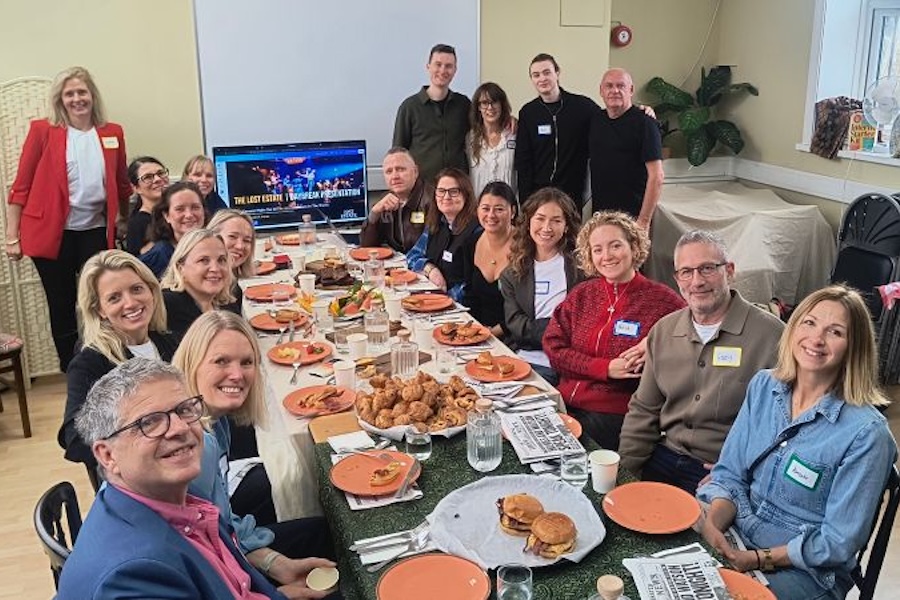
A breakfast behind the scenes at The Lost Estate got me thinking about anticipation, the power of something you can hold, and how we want our guests to feel.
There are worse ways to start a Tuesday than over breakfast with a table full of creative people, getting a glimpse behind the scenes of a world being built.
Last week, I joined the Daybreak breakfast, a series from Evolve Events in partnership with Copenhagen Convention Bureau and Switzerland Convention and Incentive Bureau. Hosted by Anna Peters, Lene Corgan and Caroline Pidroni, it brought together a small group of event professionals at The Lost Estate in West Kensington.
The team were in the midst of transforming the venue for The Great Christmas Feast. It was a particularly fitting setting for a conversation about world building: around us, the work of creating that world was already happening.
Our host, The Lost Estate’s co-founder Eddy Hackett, shared how the company brings together live music, theatre, design and hospitality to transport guests into another time and place. What stayed with me was the importance of giving guests something physical to connect with — something they can hold that helps bring the story to life.
A newspaper, for example.
Created for its Sherlock Holmes experience, The Great Murder Mystery, the newspaper is part of the wider world surrounding the show. It offers something to discover and a reason to be curious. Alongside it, Eddy passed around menus created for Le Chat Noir, each designed to belong to the world guests were entering.
He explained that the team maps the guest experience, tracing its different touchpoints and building physical elements into the journey. For its Cuban show, that might mean receiving a plane ticket. At The Great Christmas Feast, a key helps introduce guests to the experience.
It made me think about how much opportunity there is in the moments we sometimes treat as administration. An invitation can begin a story. A ticket can give someone a role within it. Arrival can build on the anticipation rather than simply process people into a room.
We put enormous care into what happens once an event begins. There is room to bring that same creativity to the days and weeks beforehand. What might make someone curious? What could they receive, read or do that starts an emotional connection before they arrive?
Eddy described an unwritten contract between The Lost Estate and its audience. The company creates the conditions for guests to be transported, while guests bring their own willingness to enter that world.
That willingness is cultivated well before the performance. Communications help set expectations, including what guests might wear, so they arrive already invested in the occasion.
There is something useful here for corporate events. We often ask people to participate, connect and contribute once they are in the room. How much are we doing beforehand to help them feel comfortable and ready to take part?
It made me reflect on some of the things we’ve been exploring with X by micebook. Guests complete a mindset quiz beforehand, then discover their tribe on arrival, receiving a coloured bracelet identifying their group. On the second night, room drops reveal what each tribe will experience on X day: the Mavericks received a boat ticket for their sailing trip, while the Trailblazers received a newspaper article about the Andalusian horse for their riding trip. Listening to Eddy, I found myself thinking about how we could build on those moments across all our events, giving each detail a stronger role in the story and making the anticipation part of the experience.
The conversation also offered a useful reminder that participation needs care.
For The Great Christmas Feast, the team builds specific moments of audience involvement into the script, with enough distance for guests who prefer to watch. Being immersed in an experience does not have to mean being pulled into the spotlight.
That feels especially relevant to business audiences. People bring different levels of confidence, enthusiasm and comfort to an event. Thoughtful design gives them ways to belong without demanding the same response from everyone.
The attention to detail extends to hospitality. Eddy explained how research informs the food and drinks at The Great Christmas Feast, drawing inspiration from the Dickens household and the period in which the story is set.
Each element contributes to the experience. It prompted me to think about how we connect the different parts of a corporate event: the invitation, the welcome, the setting, the food, the entertainment. Do they carry the same idea through? Does each help create the feeling we want guests to take away?
Lene brought that question into the design of spaces, reflecting on the Danish approach to creating comfort and connection. Her point about hygge went beyond blankets and cushions to the intention behind a room: how it helps people feel at ease and come together.
Caroline, meanwhile, reminded us that the journey through a destination can itself be part of the programme. The sense of arrival begins long before someone reaches the venue.
What I enjoyed about the morning was the chance to explore these ideas with people who approach them from different perspectives. Producers, designers, venue specialists and agency leaders all brought experiences to the table. There was a shared curiosity about how we could do things differently.