
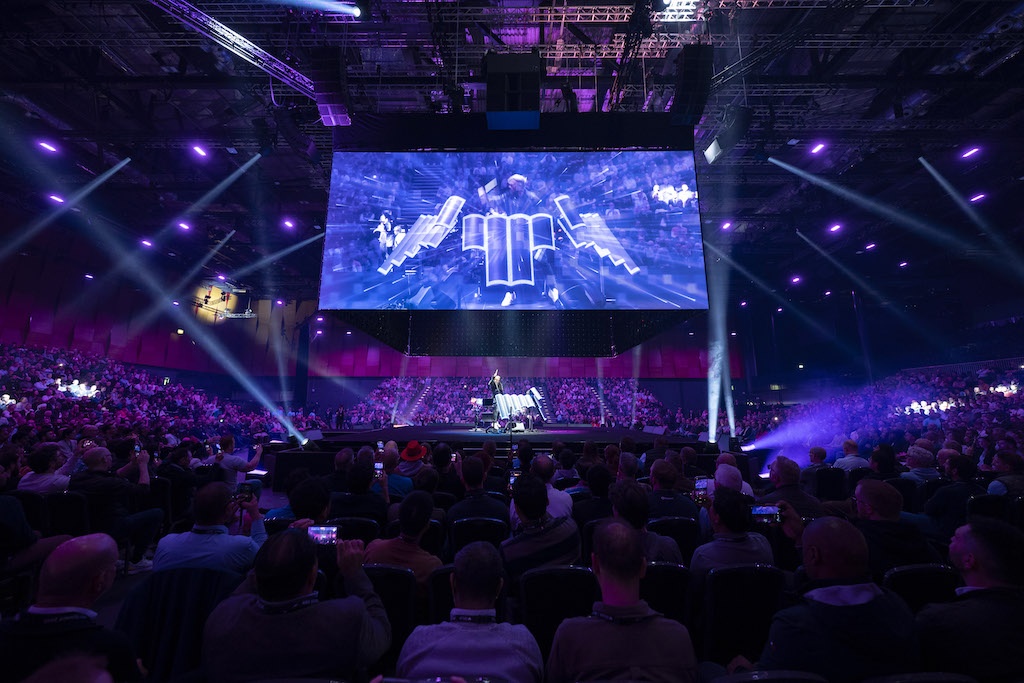
When Sleek Events first partnered with Amazon Web Services (AWS) – it’s very first client – on the London Summit in 2015, the event welcomed around 3,000 attendees. Fast forward eleven years and the summit has grown into one of the UK’s largest technology events, attracting more than 20,000 attendees and featuring 300+ speakers, 165+ sponsors and over 280 sessions, workshops and hands-on labs.
The growth of AWS Summit London mirrors the rise of cloud computing itself, but according to Sleek founder Jennifer Davidson, the secret to the event’s success lies not in repeating a winning formula, but in continually challenging it.
“We’ve worked together for more than a decade, but there’s never been a sense that we’ve ‘figured it out’ and can simply repeat the same formula year after year,” she says. “Every event is an opportunity to learn, evolve and create even more value.”
Today, AWS Summit London occupies multiple halls and event spaces across ExCeL London, requiring a five-day build, an 80-strong Sleek team on site and meticulous planning to deliver the best possible experience for attendees.
Growing together
Long-term client relationships are often talked about in the events industry, but few agency-client partnerships survive and thrive for more than a decade.
For Davidson, the longevity of the AWS relationship comes down to trust, investment and a shared commitment to continuous improvement.
“The reality is that no relationship nurtures itself,” she explains. “Strong partnerships take time, effort and a genuine commitment from both sides. Over the years, we’ve invested in understanding AWS at a much deeper level – not just the audience, but the leadership principles, expectations and standards that make the business what it is.”
As AWS Summit London has grown, so too has the complexity of the event. Attendee expectations have evolved, technology has transformed what’s possible and the number of stakeholders involved has expanded significantly.
Yet Davidson believes the foundation of the relationship has remained remarkably consistent.
“From day one, there’s been a shared desire to create the best possible experience and a willingness to collaborate openly to make that happen,” she says.
“What has changed is the breadth and depth of the conversations we’re having. As the event has scaled, we’re working across more teams, considering more touchpoints and helping shape experiences in ways that go far beyond operational delivery.”
While the event, audience and technology have all evolved, Davidson says the partnership has evolved alongside them.
“That’s probably why the partnership has stood the test of time. We’ve continued to evolve together.”
Reinvention, not repetition
For an annual event that attracts thousands of returning attendees, one of the biggest challenges is ensuring each edition feels fresh while retaining the elements audiences already value.
Rather than pursuing wholesale reinvention, Sleek focuses on continuous evolution.
“A lot of the evolution focused on refining the attendee experience,” says Clare Timmins, who leads the project team. “We looked closely at how people moved through the venue, how content was consumed and how different areas connected together.”
The team also continued to develop sponsor integration, ensuring partner activations felt like part of the wider event experience rather than standalone moments.
“The event tends to evolve through lots of intentional improvements rather than one dramatic change,” says Timmins.
That philosophy extends to the planning process itself. Detailed debriefs, stakeholder feedback and year-round evaluation all contribute to the next edition of the event.
“We spend a lot of time reviewing feedback from attendees, stakeholders, partners and the wider project team to understand where there are opportunities to improve,” says Timmins. “But reinvention isn’t something that happens in a single workshop. It’s an ongoing process of listening, observing and challenging ourselves throughout the year.”
New elements introduced in 2026 included a new closing keynote, expanded sponsorship opportunities and food halls split across two halls to enhance attendee flow.
Designing a city for 20,000+ people
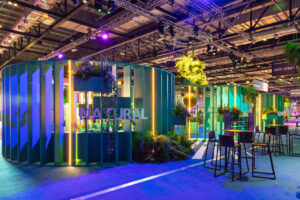
Timmins describes the planning process behind as being closer to designing a city than organising a conference. “We design the event almost like a city, with different districts such as high streets, village-style networking areas and experiential zones,” she explains.
Having experienced AWS Summit London first-hand, the comparison felt particularly apt. While the scale of the event was impressive, what stood out most was the energy and engagement across the show floor. Delegates weren’t simply moving between sessions; they were actively participating in the experience, whether exploring hands-on activations, learning about new technologies or networking in the event’s own on-site pub. The event felt less like a vast exhibition and more like a vibrant community.
Every attendee movement is carefully modelled using transport data, registration forecasts and session demand patterns. Arrival rates from nearby transport hubs are analysed to determine everything from the number of registration desks and security lanes required to queue lengths at peak periods.
One of the biggest operational challenges is managing the compressed arrival window, which sees more than 20,000 attendees moving through registration, security and badge collection before a keynote attended by around 6,500 people.
“At this scale, nothing exists in isolation,” says Timmins. “A decision on registration flow impacts security staffing, which impacts queue design, which impacts how quickly we can move people into keynote and breakout sessions.”
The event’s footprint has expanded significantly over the years. While early editions occupied a single hall, AWS Summit London now utilises additional spaces including Maritime Hall and the Maritime Suites, increasing both capacity and flexibility.
Even the keynote space has evolved. Although it remains in the same location, it has been repeatedly re-engineered to maximise capacity, with this year’s design adopting a tiered boxing-ring style layout to accommodate more attendees within the same footprint.
Data now plays a far greater role in these decisions than it did a decade ago.
“We use lead scanning and session attendance data to understand which topics, formats and sponsor activations resonate most strongly with attendees,” says Timmins. “At this scale, data helps us move from making assumptions to making informed decisions.”

Sustainability at scale
As the event has grown, so too has its sustainability strategy. According to Sleek’s sustainability lead Gabriella Weekes, the biggest shift over the last decade has been moving sustainability from individual initiatives to a framework that runs throughout the entire event lifecycle.
“We’re now considering sustainability at every stage, from initial supplier RFQs and production decisions through to measurement, reporting and legacy,” she says.
For the 2026 edition, sustainability requirements were embedded into supplier selection processes from the outset, while closer collaboration with AWS’s global sustainability team helped align delivery with wider organisational goals.
The event team also continued to develop its approach to measurement using Trace by isla, with dedicated resource focused on carbon footprint reporting.
Supplier engagement has become another major focus, with Sleek working closely with partners to identify opportunities for continuous improvement.
“The goal isn’t to deliver one-off sustainability wins,” says Weekes. “It’s about creating a framework for continuous improvement, where every edition of the Summit leaves us with more insight, stronger supplier partnerships and new opportunities to reduce impact in the future.”
Many of the most impactful initiatives take place behind the scenes. Through its partnership with Event Cycle, materials from the event are repurposed and donated to community organisations rather than being discarded.
Items rehomed following this year’s event included a traditional red telephone box and a life-size model rocket, contributing to more than 190 items finding a second life after the event.
Looking ahead
Despite the scale, complexity and growth of AWS Summit London, Davidson believes the mindset that shaped the event in its early years remains just as relevant today.
“When I say you’re only as good as your last gig, I’m really talking about the fact that trust, credibility and reputation take a lifetime to build, but can be lost in a second,” she says. “Every event is a fresh opportunity.”
AWS Summit London 2026 in numbers
- 20,000+ attendees
- 165+ sponsors
- 300+ speakers
- 280+ sessions, workshops and labs
- 6,500 keynote audience
- 150+ AWS activations
- 80-strong Sleek team on site
- Five-day build
- 190+ items rehomed post-event
- 11 years of partnership between AWS and Sleek