
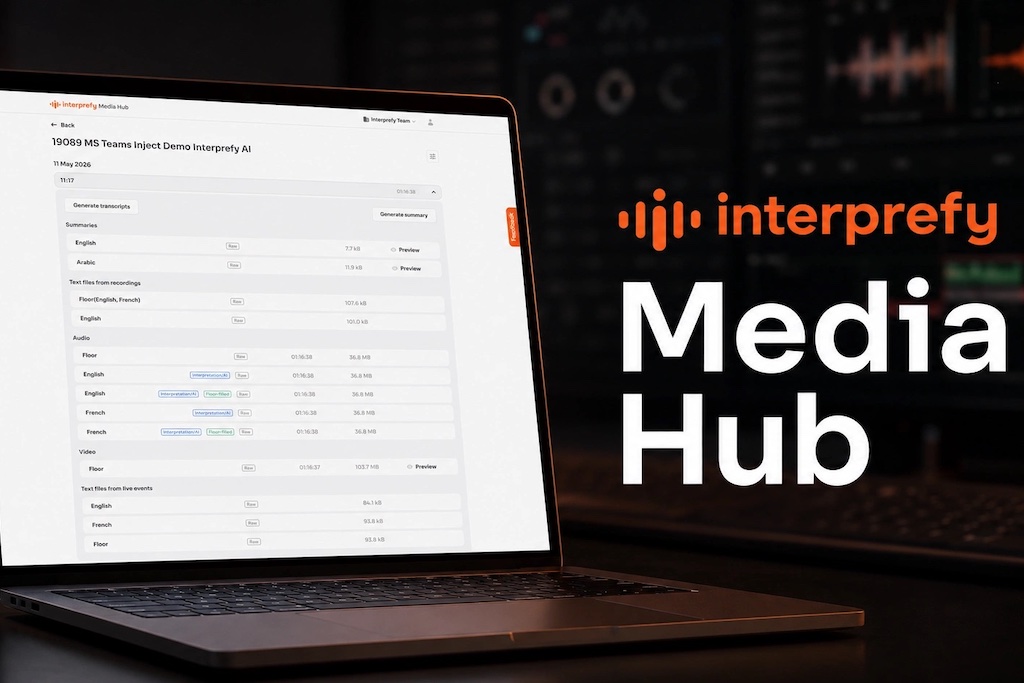
Interprefy has launched a new self-service platform designed to help event teams access, edit and repurpose multilingual content after an event.
Media Hub brings recordings, captions, transcripts and multilingual audio together in one secure location, where they remain available for 12 months following an event.
Users can trim recordings, adjust caption timings and download ready-to-share videos without using external editing tools. The platform can also generate AI-powered summaries in more than 80 languages, regardless of which languages were enabled during the original event.
Other features include downloadable session transcripts, multilingual audio organised by language and channel, interpretation-only or floor-filled audio files, and videos with selected audio and captions embedded.
Interprefy said the launch comes as event teams face growing pressure to extend the reach and value of their content beyond the live experience, citing research which found 70% of event marketers consider post-event content amplification critical to driving ROI and building audience trust. This can be particularly challenging for international events, where recordings and other assets may need to be quickly adapted for audiences in different markets and languages.
CEO Oddmund Braaten said: “An event creates valuable multilingual content long after the live conversation has finished. With Media Hub, we’re putting that content directly into our customers’ hands, so they can access it quickly, adapt it to their needs and keep creating value from every multilingual event.”
Braaten said the platform would also enable organisations to carry the inclusivity of a multilingual live event into the content shared afterwards.
“If organisations invest in making an event accessible to multilingual audiences live, there is a real opportunity to carry that inclusivity into the content they produce afterwards,” he added.
“Our focus has always been on removing language barriers from the live event experience, but those barriers shouldn’t reappear once an event is over. We see a real opportunity to help organisations make multilingual content work harder and for longer, while making it easier for teams to reach audiences in the languages they use every day.”