
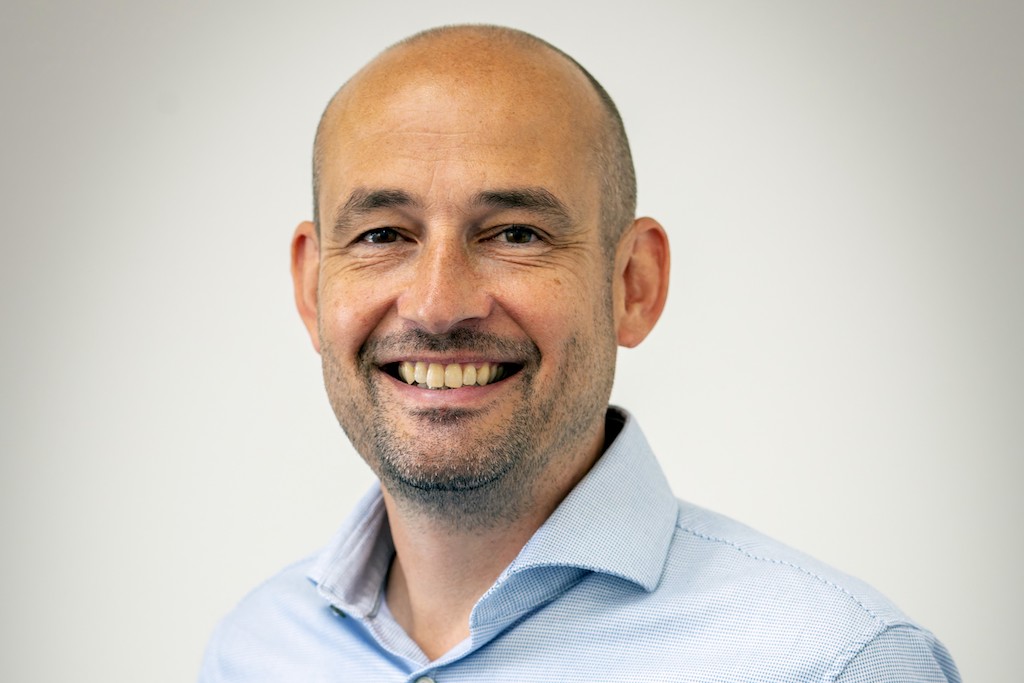
As Parallel Blue marks its 35th anniversary in 2026, managing director Paul Martin reflects on his route into events, steering the business through tough times, and why opportunity still exists for agile agencies…
Congratulations on Parallel Blue reaching the 35-year milestone. You joined the business in 2013 and later took over as owner and managing director in 2017. How did that journey come about?
I didn’t go into events straight away. After leaving college, I spent nearly 10 years working in financial services.
Then in the early 2000s, I had the opportunity to support the ramping up of Cowes Week, which was sponsored by my company, Skandia, at the time. I’ve always been an organiser, that’s just who I am, so that was my first real step into events.
That role grew into organising conferences, meetings and hospitality, and I did that for about 10 years. We worked with Parallel Blue during that time, so I’d known the owner John Denton since 2002. When he started looking for a way out, we had a conversation, and it just made sense.
It was a risk moving from a secure financial services role into the agency world, but it felt like the right opportunity to give the business a new direction and breathe new life into it.
What was the biggest challenge in taking over a business from the founder?
One of the biggest priorities was modernising the business in a rapidly changing market. A lot of the processes were still quite old school, spreadsheets, manual systems and so on.
We were at a point where technology was becoming essential, both in how you run a business and how you deliver events. That was probably the most fundamental shift, making sure the business was fit for purpose for the future.
How has the business evolved under your leadership?
Client acquisition has been a big focus. Previously there was quite a heavy reliance on a smaller pool of clients, so it was important to spread that risk across multiple industries.
We’ve also built a model that’s lean and flexible. We don’t carry heavy overheads; we scale up and down using our network. That’s our sweet spot.
And importantly, we’ve worked hard to get the brand back on the map. It had gone a bit under the radar, but I’d like to think we now have a much stronger profile, even though there is always more to do.
Is there a particular achievement you are most proud of?
Surviving COVID, without a doubt.
We were on a good growth trajectory before it hit, and then everything stopped. It was an incredibly tough time, trying to run a business when you don’t know when things will restart.
We didn’t lay anyone off. Everyone stayed employed and paid so that we could hit the ground running when things came back. Coming out the other side and picking up where we left off, that’s probably my proudest achievement.
We’re seeing a lot of consolidation across the event agency world right now. How is that reshaping the market?
There are two sides to it. Some mergers make sense, but others feel very financially driven, and that can change the culture and personality of a business.
From our perspective, it creates opportunity. When there is a merger, clients often reassess their options. We have seen that with tenders, where clients approach us even when they already have an incumbent agency.
So, it does open doors for agencies like us.
How is technology, particularly AI, changing the way you work?
There is an expectation now that AI should play a part, and we do use it where appropriate, particularly in planning, proposals and content.
But events are still very much about the human touch, especially on site. We are also cautious when it comes to data and sensitive information.
It is about balance. AI is here to stay, but it needs strong human oversight. Clients sometimes think it can do everything, but that is not the reality.
How are client expectations changing?
There is more emphasis on technology and how it can make events more engaging, but also on cost.
Budgets are under pressure, and clients often expect similar pricing to a few years ago, even though costs have gone up significantly. That means a lot of expectation management.
Risk management is also much bigger now. Clients naturally expect every detail to be covered, especially with the current global uncertainty affecting travel and logistics.
Where do you see the biggest opportunities for growth in the industry?
There is a lot of growth in sectors like fintech and SaaS. Those businesses are expanding quickly and investing in events.
For us, it is about scaling sensibly and continuing to win new clients. We are also looking again at areas like high-end private experiences through Parallel Platinum, our luxury concierge-style offering. We launched it just before COVID, so it never really had the chance to gain traction, but it is something we would like to revisit.
We are also looking to grow areas like hospitality and incentives and using those more discrete services as a way to open the door to wider client relationships.
What is your vision for the next chapter of the business?
We want to continue growing, but in a controlled and sensible way. It is not about headcount. It is about using the systems and structure we have to support more clients and more events.
Something I am also passionate about is improving pathways into the industry for younger people, helping the next generation understand the opportunities in events, hospitality and tourism.