
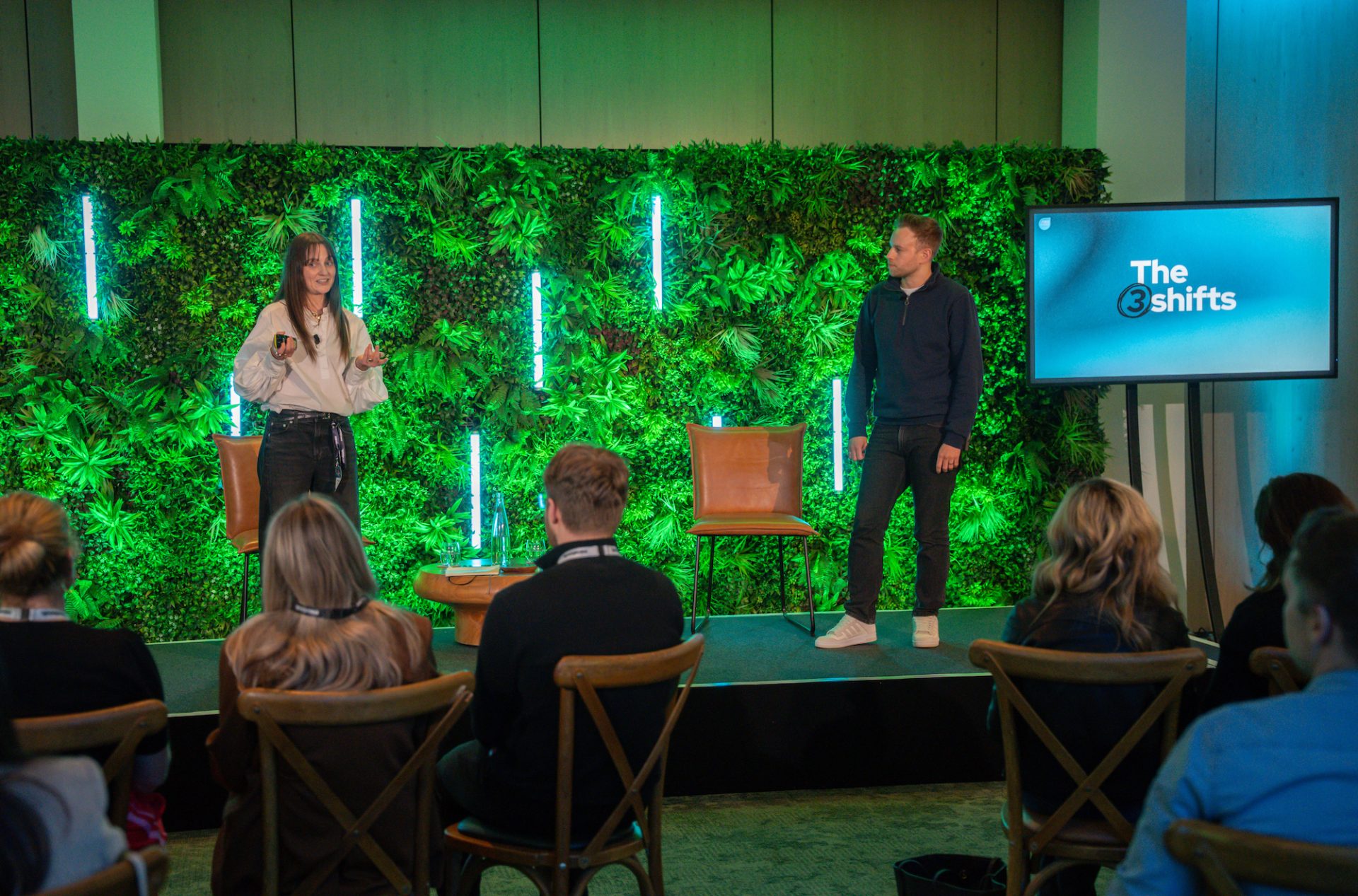
Events need to move beyond agendas and aesthetics and instead focus on how people feel, connect and behave, according to First Event’s head of creative strategy Chloe Patrickson and head of tech & innovation Max Collishaw.
Speaking at micebook Northern Edition last month, the pair challenged planners to rethink creativity not as a visual layer, but as something that runs through the entire experience, from the first touchpoint to long after the event ends.
“We found that nine in 10 people really remember the connection they made, how an event made them feel, or how it shifted a behaviour,” said Patrickson.
At the heart of First Event’s approach is a shift away from designing around content or format, towards designing for human connection. For Collishaw, that means looking beyond production elements. “It’s not about lights, screens or staging. It’s how you want people to feel when they experience that moment,” he said.
Bringing more voices into the creative process
The agency’s creative strategy is built around a simple but structured framework, designed to bring multiple disciplines together early in the process and unlock more impactful ideas.
“Creativity is not just about the creatives. It’s about the whole business,” said Colllishaw. “Make sure you’ve got the right people in the room at the right time.”
By involving producers, tech teams and account leads from the outset, agencies can avoid missed opportunities and create more feasible, joined-up ideas. For example, you might have a tech lead who sees an opportunity no one else did, or a producer who knows the venue inside out, added Patrickson.
The three shifts shaping better experiences
First Event’s approach centres on three key “shifts” that reframe how teams respond to a brief:
Atmosphere to feeling
Rather than focusing on how an event looks, teams are encouraged to design an emotional journey across the entire experience, from pre-event comms to post-event impact.
“It’s about the emotional arc, not just the room itself,” said Patrickson.
Format to participation
Events should actively involve attendees, not just present to them. Creating space for people to contribute, interact and shape the experience increases engagement and buy-in.
“People believe in ideas more if they feel part of them,” she explained.
Moment to momentum
Events should not be treated as standalone moments, but as catalysts for longer-term impact.
“What do you want people to be saying three months down the line?” Patrickson asked.
Designing for different audiences
In collaboration with the audience, the discussion also highlighted the need to design experiences around different attendee types, rather than assuming a single journey.
“It’s about thinking how different people want to feel,” said Collishaw. “A tech expert might want deep access to the product, while an influencer wants a completely different experience.”
This level of personalisation is increasingly enabled by technology and data, particularly in areas such as incentives and large-scale experiences.
From ideas to measurable impact
First Event shared examples of how this approach translates into outcomes, including a recent hackathon-style event where rethinking the environment led to stronger engagement and collaboration.
By prioritising how participants felt, the agency created a more open, inclusive space that encouraged interaction and contribution. The result was tangible: nearly 90% of attendees said they planned to continue developing on the network or collaborating with people that they met at the event, demonstrating how experience design can drive long-term impact.
The one question that changes everything
To anchor the approach, Patrickson and Collishaw urged planners to focus on a single question when shaping any experience: “What’s the one thing you want people to feel that they couldn’t feel anywhere else?”
For First Event, that question is the difference between creating an event and creating a meaningful experience.