
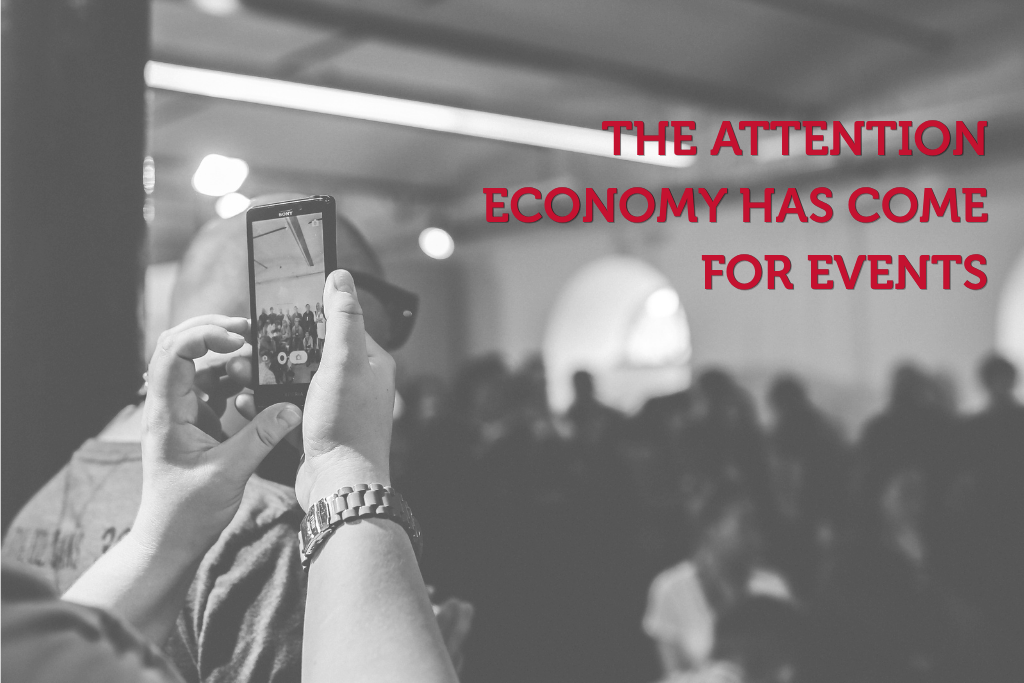
There was a time when getting people in the room was the hard part. Now, that might be the easiest part of the job. Because attendance no longer guarantees attention, and attention is where the real battle is being fought, according to Speakers Corner.
If you are running events right now, you have probably felt this shift. It is not always written into briefs or called out in post-event reports, but it sits quietly underneath almost every decision. The challenge is no longer simply about filling seats, but about holding focus in a world designed to fragment it.
In other words, events are no longer competing to be attended. They are competing to be paid attention to.
The rules have changed
Events used to operate in a more contained environment. You were competing with other conferences, industry gatherings, or internal priorities. If someone had committed to attending, there was a reasonable expectation that they would be present, both physically and mentally.
That is no longer the case.
Today, your event is competing with everything. A keynote is not just up against the next session on the agenda, but against inboxes, Slack notifications, WhatsApp messages, and the quiet pull of LinkedIn in the background. Even within the room, attention is divided, with people physically present but mentally managing a constant stream of competing demands.
This changes the nature of the challenge. The question is no longer “how do we get people to attend?” but “why would someone choose to stay engaged once they are there?”
The questions organisers are really asking
Spend time with any event organiser and a familiar set of concerns emerges. They are not always said out loud, but they are felt.
Before the event, there is growing pressure to justify attendance. You are thinking about how to make the experience feel genuinely worth the time, travel, and cost, and how to cut through a crowded market where every event claims to be unmissable.
During the event, the focus shifts to engagement. It is no longer enough to see a full room. The real question is whether people are actually present in the moment. You start to notice the subtle signs, attention drifting, energy dipping, focus slipping when something does not quite land.
After the event, the reflection becomes more pointed. Did anything stick? What did people take away beyond the venue or the catering? Would they come back, or recommend it?
These questions are less about logistics and more about impact. And running through all of this is a simple truth. Attention is fragile, and it cannot be taken for granted.
The silent problem: polite disengagement
One of the more difficult aspects of this shift is that disengagement is not always obvious.
Rooms can be full, audiences can appear attentive, and feedback can remain broadly positive. On the surface, everything looks like a success. Yet beneath that, a different reality often exists. People are checking their phones, responding to messages, or mentally stepping away from what is happening on stage.
It is what we often see as polite disengagement. It does not interrupt the flow of the event, but it quietly erodes its impact.
The challenge is that it creates a false sense of success. An event can run smoothly and still fail to leave a meaningful impression. In an attention driven environment, that distinction matters more than ever.
Content inflation and the shrinking value of good
At the same time, the volume of content in the events space has grown significantly. There are more events, more sessions, and more voices competing for the same audience.
While this creates more choice, it also changes how content is experienced. Audiences have seen a lot. They have heard similar themes, formats, and ideas. As a result, what once felt fresh can now feel familiar.
This creates an important shift. Good content is no longer enough to hold attention. When something feels predictable, even if it is well delivered, it becomes easy to disengage, particularly when attention is already limited.
For organisers, this raises the bar. The challenge is not simply to deliver quality, but to create moments that feel distinct, relevant, and worth engaging with in real time.
The expectation gap
Alongside this, expectations have risen. Attendees arrive with a clear sense of what a high-quality experience should look and feel like. They expect strong production, thoughtful content, engaging delivery, and a sense that their time is being well used.
Behind the scenes, the reality is often more complex. Budgets are under pressure, timelines are tight, and there are multiple stakeholders to manage.
The result is a growing gap between expectation and delivery. And it is within this gap that attention is often lost. When something feels slightly underwhelming or overly familiar, audiences disengage quickly, and once that begins, it can be difficult to bring them back.
The energy curve problem
Most events still follow a familiar rhythm. They start strong, settle into a steady middle, dip after lunch, and then try to rebuild energy towards the end of the day.
This structure has worked for years, but it is increasingly out of step with how attention behaves today. In a fragmented attention environment, even a small dip in energy can lead to a lasting loss of engagement. Audiences do not always reset in the way they once might have.
As a result, organisers are starting to think more carefully about the flow of attention across the day. Rather than focusing only on the sequence of sessions, they are considering where energy rises and falls, and how those moments can be shaped deliberately.
This shift from scheduling to experience design is becoming a defining feature of more effective events.
The challenge of trying to please everyone
Another factor that shapes attention is the tendency to design events for broad appeal. In trying to cater to diverse audiences, agendas can become wide ranging and balanced, offering something for everyone.
While this increases accessibility, it can also dilute relevance. When content becomes too general, it is harder for individuals to feel a strong connection to what is being shared.
Attention is closely tied to relevance. When something speaks directly to your challenges or interests, you lean in. When it feels generic, you begin to drift.
This creates a tension between scale and specificity, and it is one that organisers are increasingly navigating.
From agenda building to attention design
Taken together, these shifts point to a broader change in the role of the event organiser.
Traditionally, success has been defined by building a strong agenda, securing credible speakers, and delivering a well organised event. These elements still matter, but they are no longer sufficient on their own.
The most effective organisers are starting to adopt a different perspective. They are moving towards what could be described as attention design, thinking not just about what happens, but how it is experienced.
This means considering where attention is likely to peak, where it may dip, and what moments will leave a lasting impression. It also means focusing more on the audience’s emotional and intellectual journey, not just on the sequence of sessions.
In this context, the event becomes less of a schedule and more of a designed experience.
Where speakers fit into this shift
Within this changing landscape, the role of speakers becomes even more important.
Speakers have always shaped the content of an event, but they now play a central role in shaping attention. The right speaker can set the tone, reenergise a room, and create moments that cut through the noise and stay with people long after the event ends.
It is something we see time and time again when working with event teams. The difference a speaker can make is not just to the content, but to the energy and overall impact of the event.
As a result, the way speakers are selected is evolving. Expertise and credibility still matter, but so does delivery, connection, and the ability to hold a room.
Designing for attention
Designing for attention does not require a complete overhaul. It requires intention.
Organisers are becoming more selective about what goes into the agenda, focusing on sessions that offer clear value. They are thinking more carefully about how events begin, recognising the importance of those early moments. They are also introducing more variety in format and pacing to maintain engagement.
Most importantly, there is a growing recognition that attention must be earned continuously. It is not secured at the start of the day and carried through automatically. Each moment either strengthens it or weakens it.
Events that are remembered
Ultimately, the attention economy changes what success looks like.
It is no longer enough for an event to be well attended or smoothly delivered. The more important question is whether it made an impact.
Did it create moments that held attention?
Did it prompt new thinking or meaningful discussion?
Did it stay with people after they left the room?
The events that succeed are not always the biggest or the most complex. They are the ones who understand how attention works and design experiences that respect it.
Because in a world where attention is scarce, the events that matter are the ones people remember.
And the difference between being attended and being remembered is where the real value now sits.