
Event organisers have access to more attendee data than ever, yet many are still delivering generic, one-size-fits-all experiences, according to new research from the Experience Studio by Amex GBT.
The report, Personalization, Redefined: Applying experience design to create events that stay with people, highlights a growing gap between traditional event planning strategies and the increasingly personalised experiences people encounter in their everyday lives.
Based on in-depth interviews with senior event and marketing leaders, experience design experts and attendees around the world, the research suggests that personalisation is no longer a premium differentiator but a baseline expectation.
The challenge, it argues, is not collecting more information, but translating existing data into relevant, meaningful moments that make attendees feel understood.
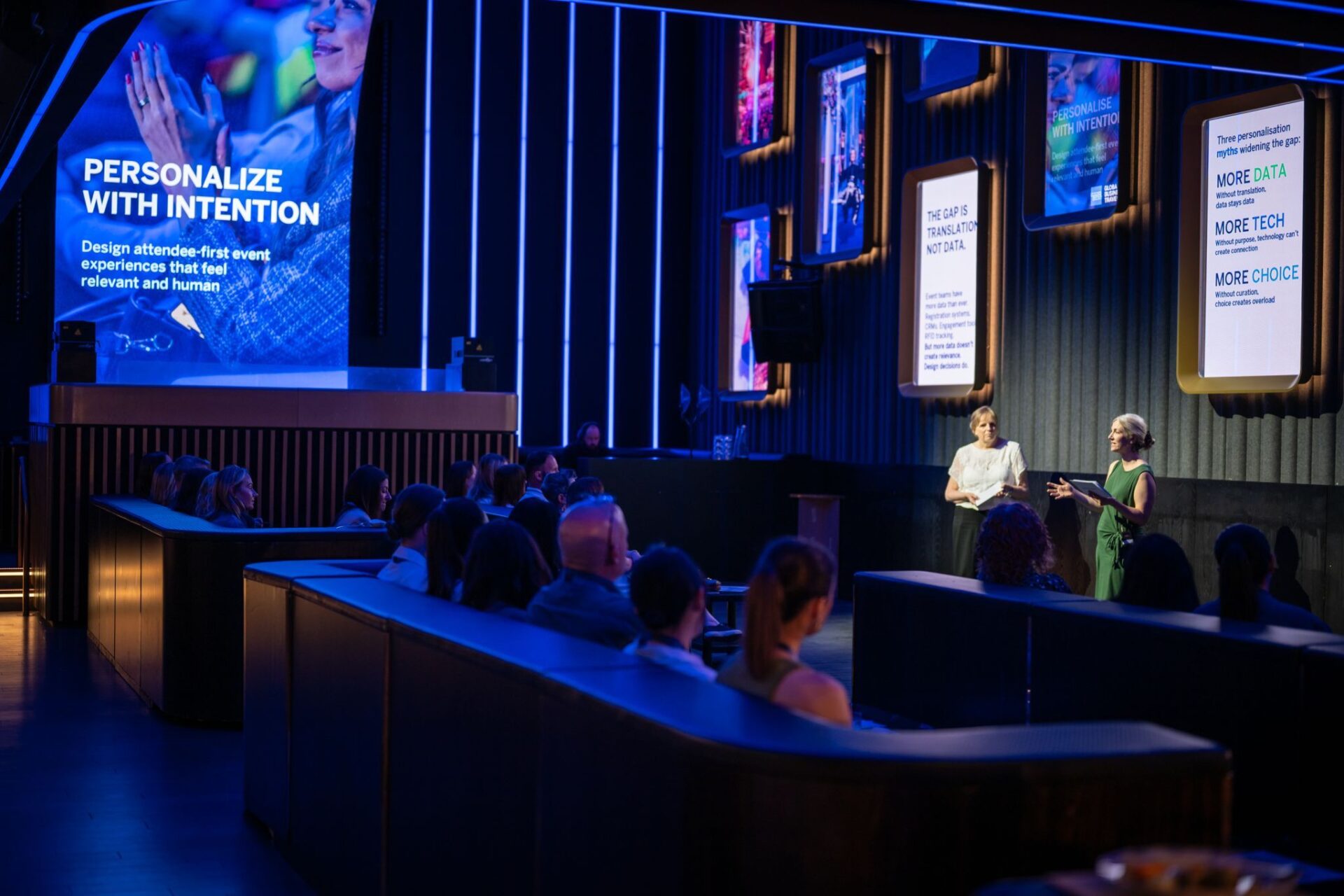
The Experience Studio shared a preview of the findings at Envision 2026 in London last month, where Catherine Southall, head of M&E business development UK&I, and Bess Penty, head of the Experience Studio UK&I, explored how planners can close the gap between knowing about attendees and making them feel known.
“Personalisation has never been more possible, yet events still feel like they are designed for the crowd rather than the attendee,” Southall said.
“The chances are, when you think of an experience that made you feel valued, it wasn’t because they had more data on you. It was because they understood you better and understood why you were in that moment. It’s not a tech gap, it’s a design gap.”
Penty pointed out that attendees are no longer comparing an event solely with its previous edition or with other conferences. Instead, their expectations are being shaped by the personalised recommendations and curated content they receive from platforms such as Netflix, Spotify and Amazon.
“These daily experiences set a new standard for what relevance feels like,” she said. “If events don’t start to rise and meet that new bar, they can feel dated and attendees may not engage as much, even if they can’t always articulate why.”
Four shifts reshaping event experiences
The report identifies four interconnected shifts that are beginning to reshape event experience design.
The first is a move from presence to purpose. Rather than focusing primarily on attendance, job titles and session scans, organisers should seek to understand why people have attended and pay closer attention to what they choose, avoid and respond to during an event.
The second is a shift from obvious personalisation to “quiet impact”. The report warns that too little personalisation can feel generic, while too much can become intrusive, fragment shared experiences and reduce opportunities for spontaneity.
“The best-enabled events don’t feel AI-driven. Attendees just notice that they felt right,” Southall said at Envision. “Technology needs to disappear into the experience. It needs to feel more human, not more automated.”
This forms part of the report’s vision of AI as an “invisible experience layer”, quietly supporting intelligent matchmaking, contextual recommendations, real-time content adaptation and the formation of smaller communities around shared interests and intent.
The third shift focuses on designing more intentional connections. Although networking is often one of the most memorable aspects of an event, meaningful encounters are still largely left to happen organically. The report suggests attendee data and AI could support curated introductions, intelligent seating plans, peer communities and environments that make valuable connections more likely.
Finally, the report predicts a move from static delivery to adaptive experiences that respond to attendee behaviour as an event unfolds. This could include redirecting people away from congested areas, changing session recommendations in response to demand or adapting content when attention begins to drop.
“We plan the agenda, deliver the plan and then measure against the plan,” Southall said. “The organiser’s role is still to plan a great event, but it is also about designing an experience that allows you to sense, interpret and respond dynamically.”
Measuring return on experience
Alongside the four shifts, the research introduces a Return on Experience framework designed to complement traditional ROI measurement. It encourages organisers to consider three components: the “moment of shift” an event is intended to create; the behavioural signals that demonstrate whether that change occurred; and “relationship velocity”, or how much faster relationships, trust or commercial opportunities progress because of the event.
This could mean measuring follow-up meetings, introductions, content sharing, repeat attendance or pipeline movement rather than relying solely on attendance figures and post-event satisfaction scores.
The report concludes that successful personalisation is not about demonstrating how much an organiser knows about attendees but using insight with enough care and discernment to make them feel seen.
“Personalisation is the mechanism, but feeling seen is the outcome,” Penty said. “That feeling is what drives loyalty and advocacy and makes someone come back to your event year after year.”