
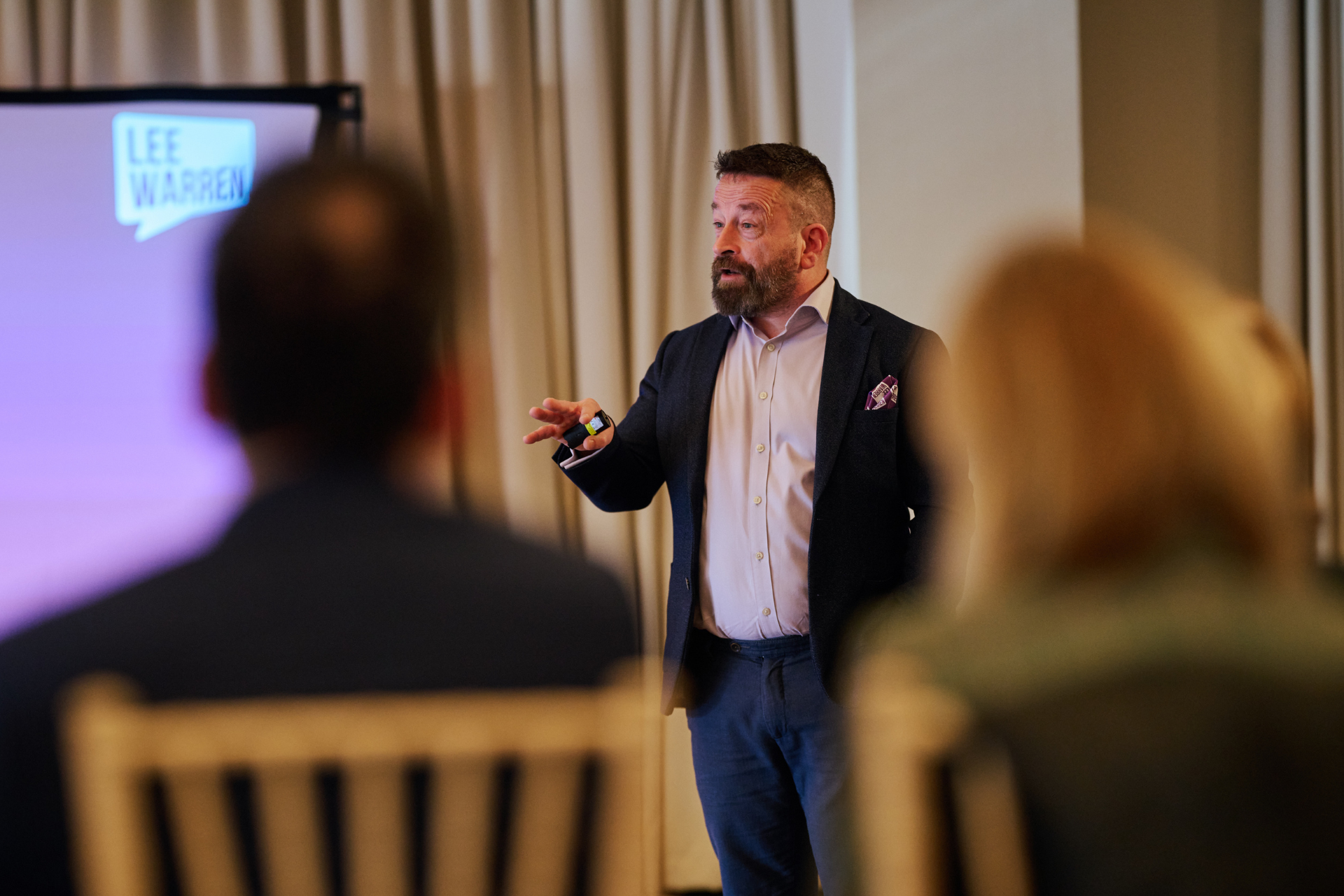
Getting people to support an idea at work is rarely straightforward. For event professionals, it can mean securing budget, aligning internal teams, or convincing senior stakeholders to back a proposal under pressure. Even strong ideas can struggle internally, not because they lack merit, but because of how they are communicated. Speaking to micebook following his keynote at Corporate Connect, persuasion expert Lee Warren, who is represented by Speakers Corner, explains why influencing others inside organisations is often harder than expected.
At the core of his message is the idea that persuasion is never purely logical. “When you’re trying to engage and persuade people, you have to understand that it happens emotionally as well as rationally,” Warren says. Having a good idea is not enough on its own. What matters is how that idea is framed, whether it connects to the needs and concerns of others, and whether it is expressed in language that feels relevant to them.
One of the most common reasons internal conversations fall flat, he says, is lack of preparation. With busy schedules and competing priorities, people often move straight into meetings without considering how their message will land. “We don’t give enough time to prepare our messages,” Warren notes, pointing out that many conversations fail before they even begin because the speaker has not stepped back to think about what the other person actually needs to hear.
Another frequent issue is the tendency to overwhelm people too early in the process. Rather than aligning others around a shared outcome, conversations can quickly become overloaded with detail, data and requests. “Sometimes people start asking for too much, too quickly,” Warren says. Instead of building agreement first, people jump straight into the mechanics of how something will be delivered. This is often compounded by what Warren describes as the absence of a gradual build. “People often go straight for the big ask,” he explains, rather than setting ideas out in smaller stages that allow others to feel comfortable and confident saying yes along the way.
When teams work across different cultures and generations, these challenges can become more pronounced. Warren says this is a recurring theme when he speaks to corporate audiences. Differences in communication style, attitudes to silence or discussion, and preferences for online or in-person interaction can all affect how messages are received. Despite this, he believes the underlying challenge remains largely the same. Many of the barriers to persuasion sit deep in human psychology and show up across industries and levels of seniority.
For Warren, the most effective shift people can make is learning to see their idea through someone else’s eyes. “What will this really look like in the other person’s world?” he asks. Whether an idea feels safe or risky, urgent or insignificant, often has less to do with the idea itself and more to do with how it affects the person hearing it. That shift also changes how people think about persuasion. “People who struggle with influence tend to think, ‘What do I want to say, and what’s the best way to say it?’” Warren says. “People who are very good at influencing think, ‘What do people need to hear from me to get the result that I want?’”
For event professionals navigating complex internal conversations, Warren’s advice is a reminder that persuasion is not about pushing harder or adding more information. It is about understanding the people you are trying to influence and shaping ideas in a way that feels relevant, manageable and meaningful to them.