
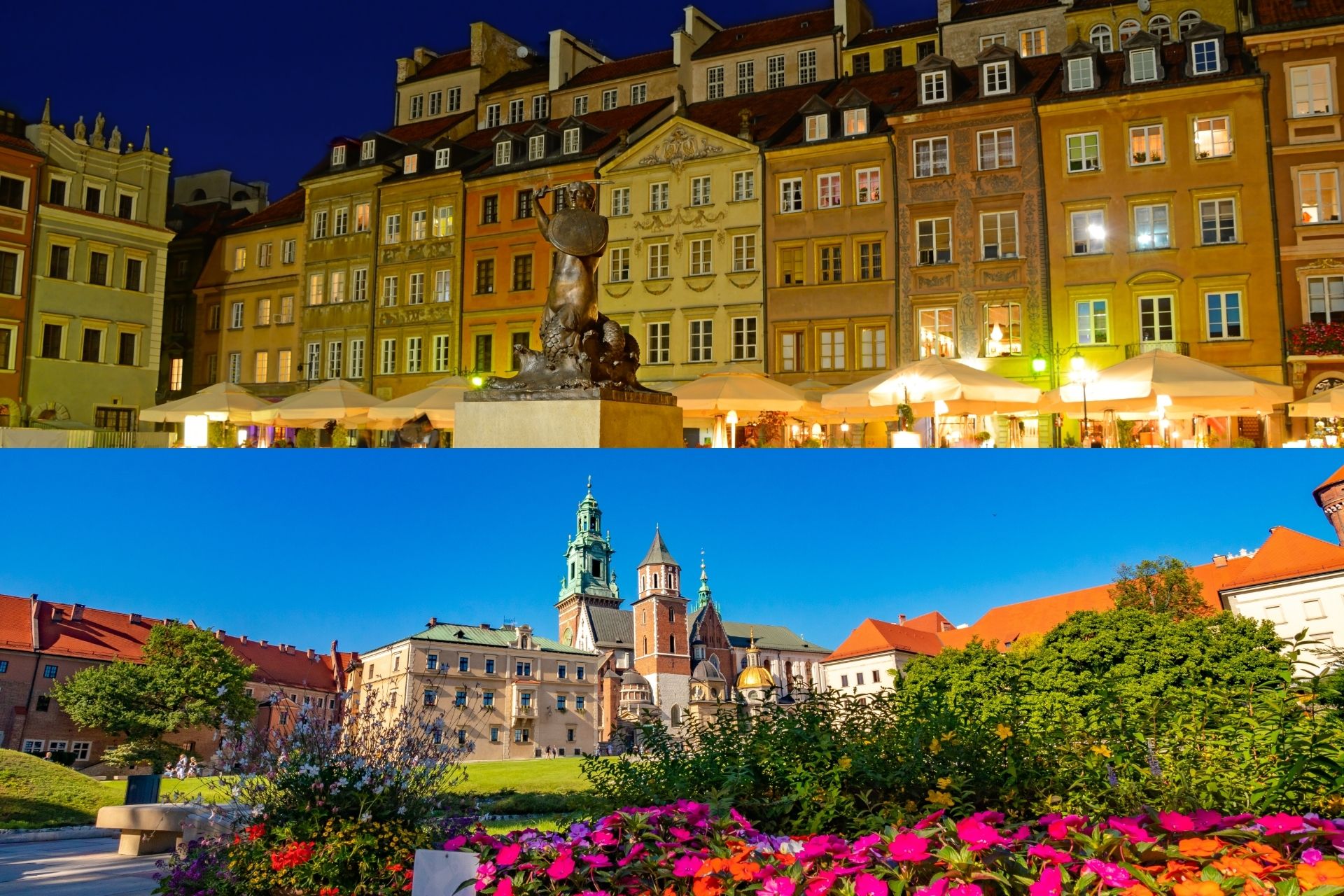
Poland is one of Europe’s most underrated MICE destinations, and much of that comes down to having two very different cities within a couple of hours of each other. Warsaw is the business capital; Krakow is the historic heart.
“Warsaw and Krakow offer two very different experiences, and this is actually one of Poland’s strengths as a destination,” says Marta Kicler, Business Development Director at Mazurkas DMC Poland. The real answer for planners, though, isn’t quite as simple as picking one.
Warsaw: built for business
Warsaw is Poland’s modern, dynamic capital: strong infrastructure, a serious business environment, and no shortage of hotels and venues built with corporate groups in mind. It’s the natural choice for conferences, congresses, and product launches, where accessibility and professional facilities matter most. The city also offers a striking contrast between contemporary architecture and its complex history, giving planners room to build meaningful experiences beyond the meeting room itself.
“It works particularly well for corporate meetings, conferences, congresses, product launches and events where accessibility, efficiency and professional facilities are key,” says Kicler.
On scale, Mazurkas typically handles congresses of around 2,500 to 3,000 delegates in Warsaw, and incentive groups of up to roughly 350. Those figures are mostly practical, tied to finding accommodation for a whole group in one hotel and matching venue, restaurant, and experience capacity. The city is also compact enough that guests can walk between venues or use the metro, trams, and buses, with transfers rarely running longer than 15 minutes. That’s not just convenient; it also supports a more sustainable approach to event design, cutting down the need for private coaches.
Warsaw is fantastic for rooftop venues, too. Highline Warsaw offers panoramic views from one of the highest rooftop locations in Europe, and the Polish History Museum has become a standout, with modern conference facilities paired with a rooftop terrace looking out over the Warsaw Citadel and the Vistula River. “It is a unique setting for networking events, evening receptions or cocktails, combining contemporary architecture with one of Warsaw’s most historic locations,” says Kicler.
Krakow: built for experience
Krakow’s compact historic centre, anchored by the Main Market Square, makes it ideal for incentives and executive groups where the destination itself is a main part of the program. Everything is walkable, which makes logistics simpler as well as more atmospheric. Guests can explore Krakow’s streets, squares, and historic areas on foot, and when transport is needed, trams handle groups easily.
Incentive groups in Krakow tend to work best around 150 participants, again largely down to keeping everyone in one hotel and matching venue and restaurant capacity. As with Warsaw, though, Kicler is clear these aren’t strict limits, and both smaller and larger events have worked well in both cities depending on the client’s objectives, creativity, and budget.
What Krakow does exceptionally well is turn ordinary moments into memorable ones. “We have transformed a gala dinner at the Polish Aviation Museum into a fully immersive airline-inspired experience, with cabin crew welcoming guests and every detail reflecting the venue’s aviation heritage,” says Kicler. “On another occasion, we led a large group from Wawel Castle to the Main Market Square accompanied by a live orchestra, turning a simple transfer into a memorable celebration.” There’s also been a hands-on session at the historic Stary Kleparz market, where guests tasted regional specialities, met local vendors, and then split into teams to shop for ingredients before cooking traditional Polish dishes together.
“What guests remember is the experience itself,” Kicler says. “What they do not always see is the amount of planning, creativity and teamwork behind making those moments feel effortless. That is exactly what makes incentive travel so rewarding.”
On the hotel side, Krakow is also expanding: Poland’s first TRIBE hotel has opened in the Old Town, alongside Hotel Indigo Krakow – Wawel Castle for smaller groups wanting something with local character.
So, is it really corporate vs incentive?
There’s truth to that split, but Kicler is quick to push back on treating it as a hard rule. “There is some truth in this perception, but it is a little simplified,” she says. “Warsaw naturally has a strong position for corporate events because it is the business hub of Poland, with excellent flight connections, modern venues and a wide range of hotels suitable for larger groups and events. Krakow is often chosen for incentives because it offers a very strong destination feeling, where guests can experience history, culture, gastronomy and entertainment within a relatively small area, which makes programs very efficient from a planning perspective.”
The right choice, she says, depends less on the city itself and more on group objectives, flight connections, and how participants are arriving. “As meeting planners, we see both cities as complementary rather than competing destinations. The best choice depends on the story we want to create for the participants.”
Cost, meanwhile, isn’t a major differentiator. Both cities offer good value against other European destinations, with pricing driven more by season, hotel category, and program complexity than by which city you pick. Warsaw can sometimes be more competitive for larger corporate events thanks to its business infrastructure, while Krakow’s walkability creates a high perceived value for incentives. Spring and autumn remain the sweet spot for events in both, though Poland has increasingly become a year-round destination, and winter events can work well with the right creative concept.
The case for both
Perhaps the most useful insight from Kicler is one planners may not think to ask for: combine them. “For multi-day incentive programmes, combining both destinations allows us to showcase different sides of Poland, from Warsaw’s contemporary energy, business character and unique history, to Krakow’s heritage, atmosphere and authentic experiences,” she says. “Participants can experience the contrast between Poland’s modern capital and its historic cultural heart, creating a more diverse and memorable journey.”
For congresses and larger corporate events, the same logic applies as a pre- or post-tour option, giving delegates a reason to extend their stay and discover more of Poland beyond the main event.