
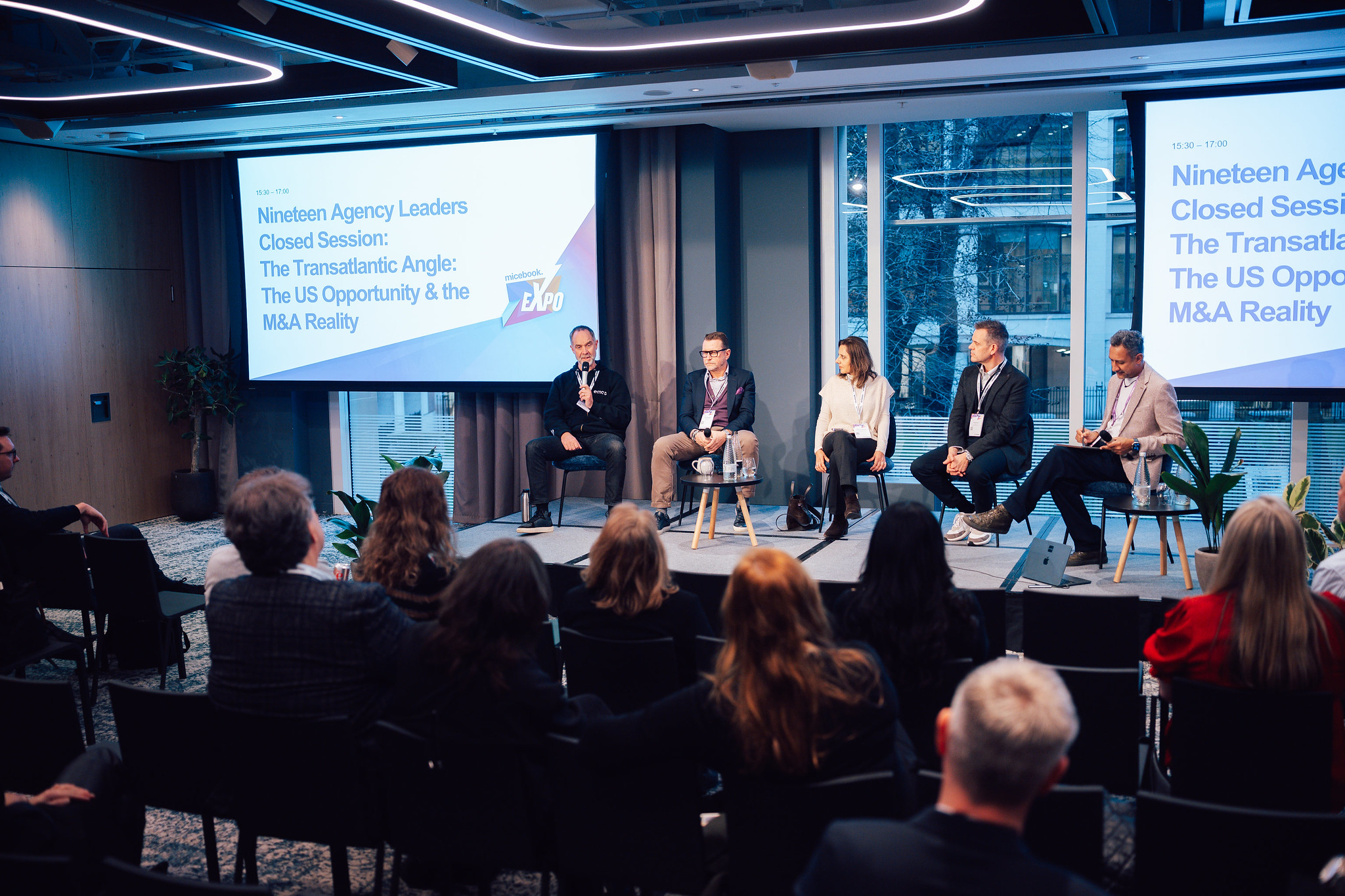
 At micebook EXPO, agency leaders gathered to unpack one of the most talked-about growth frontiers in the sector: the US market.
In a candid panel featuring Ian Cummings (Nteractive), Alistair Graham (emc3), Meenaz Diamond (Maritz) and Matt Franks (DRPG), the message was clear: the opportunity is real — but so are the risks.
Here are the key takeaways for agencies considering the leap.
1. Don’t Just Dream About It — Do It (But With Eyes Wide Open)
The panel’s first piece of advice was simple: if you’re serious about growth, don’t sit on the fence.
But the US is deceptively familiar. The shared language creates a false sense of cultural alignment. In reality, sales dynamics, workplace expectations, and communication styles differ significantly.
The trick? Listen carefully. Respect the differences. Lean into them where appropriate — and challenge thoughtfully where necessary.
2. The US Is Not One Market — It’s Many
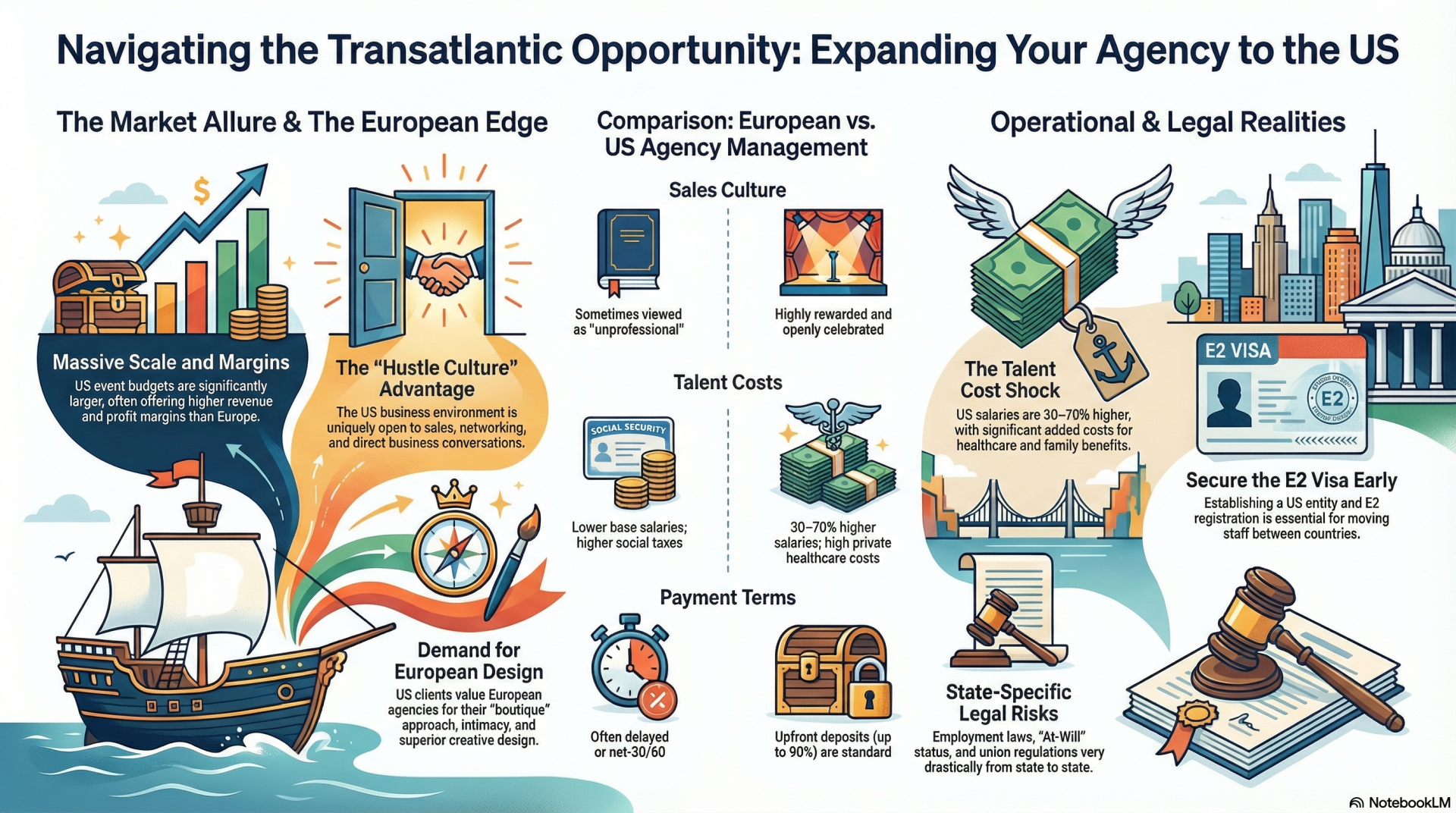
One of the biggest misconceptions is treating America as a single territory. Employment law, tax exposure, union presence, benefits expectations and even contract norms can vary dramatically from state to state. What works in New York may not translate in Texas or Illinois.
Before scaling, agencies must invest in proper legal, tax and structural advice. There are no shortcuts here.
3. Build Business Before You Build a Base
“Field of Dreams” thinking doesn’t work.
Setting up in Manhattan and hoping business appears is a fast route to burning cash. The most sustainable expansion model is client-led growth — following an anchor client into the US and deepening presence once revenue is established.
4. Get the Structure Right From Day One
US expansion is not just a commercial decision — it’s a structural one.
That means:
- A properly incorporated US entity
- A strong immigration lawyer (E-2 visas are common but require real investment)
- Robust insurance cover (litigation risk is real and expensive)
- A cross-border accountant tracking tax exposure and day counts
Cutting corners here can create serious long-term liabilities.
5. Prepare for the Talent Cost Shock
Salaries can be 30–70% higher than UK or European equivalents. Add private healthcare, family coverage and benefits expectations, and the cost base climbs quickly.
But here’s the balance: margins and budgets are often significantly higher too.
Large-scale US events can dwarf European equivalents, and deposits are more common. Done well, a US operation can be more expensive — and still more profitable.
6. Don’t Import “At-Will Fear” Into Your Culture
“At-will” employment can create anxiety within teams if handled badly. Staff may feel they can be dismissed at any time.
Several panellists stressed the importance of proactively shaping culture:
- Reassure employees you’re not a hire-and-fire shop
- Embed your European values and people ethos
- Use settlement agreements thoughtfully when exits are necessary
Your culture is part of your competitive advantage — don’t lose it at the border.
7. Politics and Religion Are No-Go Zones
The US is highly polarised. Internal discussions or public positioning on political or religious issues can damage client relationships and fracture teams.
Even everyday language or DEI terminology may carry different sensitivities depending on the state or sector. Train teams accordingly and keep the focus on the work.
8. Lean Into Your European Edge
The panel was unanimous: European agencies have genuine differentiators.
- More crafted, design-led experiences
- Boutique thinking within large-scale delivery
- Stronger sustainability credentials
- Integrated “one-throat-to-choke” models versus fragmented supplier ecosystems
In many US enterprise RFPs, sustainability expertise in particular is a standout advantage.
9. Relationships Drive Everything
The US market is deeply relationship-led. Networking is not optional — it’s foundational. Industry bodies such as PCMA, MPI and SITE provide credibility and access. Introductions matter.
Winning often comes down to who vouches for you, not just the strength of your credentials deck.
10. Be Honest About Your Appetite for Risk
Finally, the panel posed an implicit challenge:
- Do you have genuine client-led demand?
- Can you invest with a multi-year horizon?
- Are you prepared for higher fixed costs?
- Can you maintain your agency’s soul through growth, investment or M&A?
The US offers scale and margin — but it demands focus, patience and resilience.
And on that note, we’re excited to be hosting our first US event – the micebook C-Suite Event Agency Growth Summit, taking place in New York City on 12 May 2026 at NeueHouse Madison Square. This one-day event will bring together owners and executives from leading U.S., European and Canadian agencies to tackle common challenges, exchange ideas, share best practices and explore partnerships.
Find out more and register to attend here
Ahead of the event, we’re hosting a US-focused webinar this week, exploring one of the most pressing challenges facing event agencies today: the broken RFP process. Taking place on 27 February, Navigating the Broken Event Agency RFP Process will be moderated by Givner and feature a panel of U.S. industry experts.
Together, the group will examine the realities of today’s RFP landscape, including what is and isn’t working for agencies, how teams weigh the commercial opportunity of an RFP against the time and resource required to respond, and the ongoing issue of idea theft.