
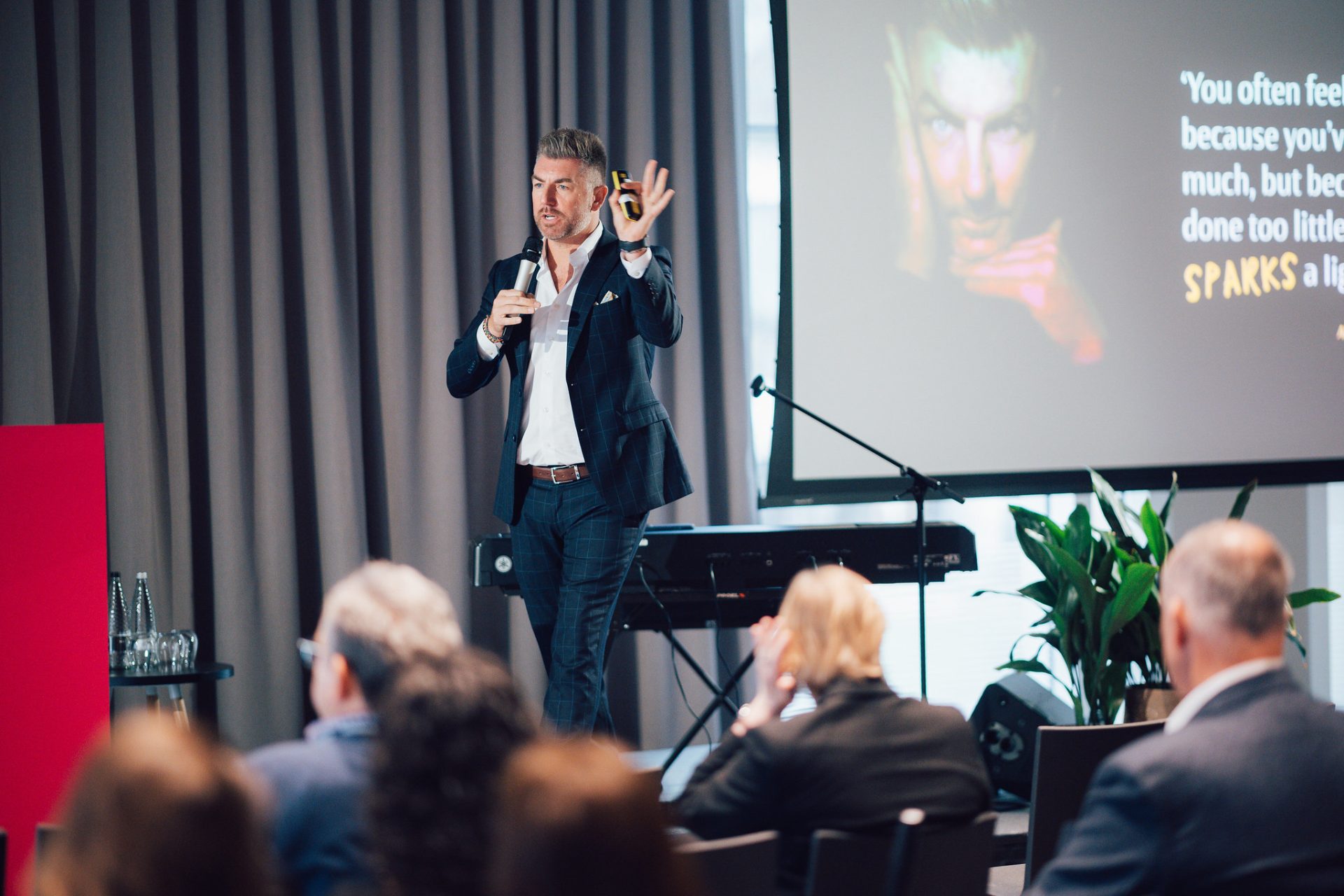
From the moment Mykel Dixon took the stage at micebook EXPO, it was clear it wasn’t going to be a conventional keynote. His session featured a mix of stories, live participation and practical ideas, all focused on how events can be designed to create real human connection.
Across the keynote and a joint workshop with The Wentworth Collective’s Lisa James, the Australian keynote speaker and author challenged the room to rethink what it really means to design experiences collaboratively, creating environments where people feel seen, brave and genuinely connected.
From ticking boxes to creating moments
Drawing on his experience emerging from Melbourne’s long lockdowns, Dixon shared how his own work shifted post-pandemic. After a period that left everyone across the world craving connection, he decided to experiment.
A LinkedIn post. No agenda. No venue. No speakers. Just an invitation to reconnect. Within 48 hours, 100 people had bought tickets to something that barely existed yet.
What followed were immersive, participant-led experiences – people bringing bathtubs full of balls into venues, creating pop-up cubby houses, composing impromptu musicals, even parading through the streets with a brass band.
The point wasn’t novelty. It was permission. “When you create the right conditions,” Dixon explained, “people bring far more of themselves than you ever could by scripting everything.”
Rather than treating suppliers, venues and audiences as transactional inputs, he reframed them as co-creators, unlocking what he called “the genius of the collective”.
It’s a mindset shift: moving from conductor to jazz band. From pitching to partnership. From controlling outcomes to composing together in real time.
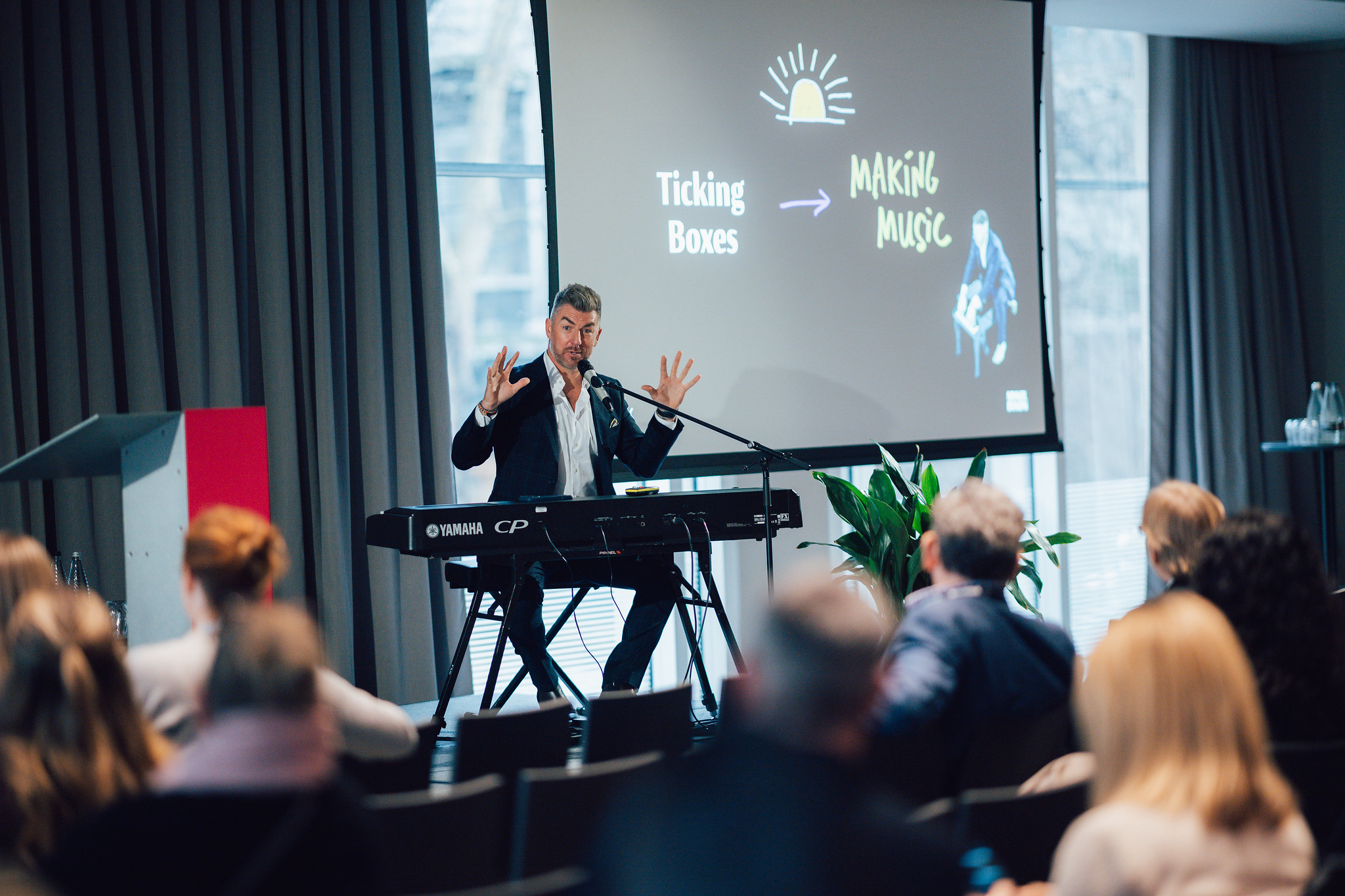
Safe spaces aren’t enough. We need brave ones.
Throughout both sessions, Dixon returned to the idea that connection doesn’t flourish in perfectly polished environments. It flourishes in brave ones. Safe spaces allow people to be who they are. Brave spaces invite them to explore who they could become.
He demonstrated this live, inviting an audience member who had never played piano to improvise on stage, a moment that instantly changed the energy of the room.
“We don’t need everyone to be the loudest person in the room,” Dixon said. “But we do need people who notice others, encourage them, and say ‘keep going’.”
It’s those small signals of encouragement, recognition, celebration, that give others permission to step forward. And that, he argued, is where transformation begins.
Designing for connection (with intent)
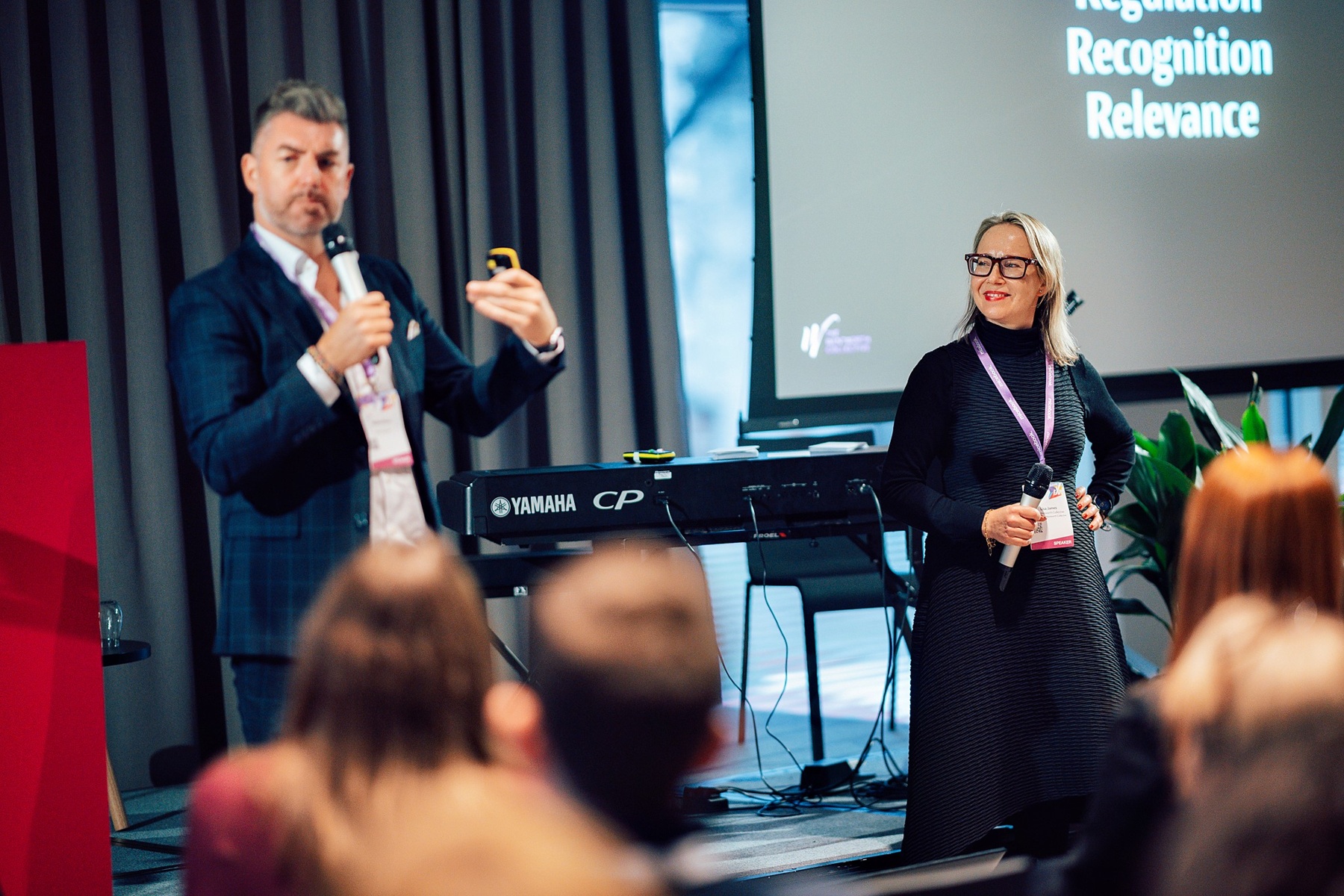
Later in the day, Dixon returned alongside Lisa James for a hands-on workshop exploring how to design connection deliberately, not accidentally.
Their starting point was sobering. Loneliness is rising globally. The World Health Organisation now equates its health impact to smoking 15 cigarettes a day. Meanwhile, we’re gathering more than ever, yet often designing experiences around efficiency, budgets and schedules rather than human need.
Their solution wasn’t complicated, but it was intentional. They introduced a simple framework: the three Rs of connection.
Regulation: Are people arriving stressed, rushed, overwhelmed? Every touchpoint either calms the nervous system or spikes it, from pre-event emails to signage, coffee queues and room layouts. If people aren’t regulated, they won’t connect.
Recognition: Do attendees feel they belong? Are they insiders or outsiders? Small design decisions around how people are welcomed, how spaces are arranged, and how interaction is encouraged, all signal whether someone feels seen.
Relevance: Does this matter to me? Can people clearly understand why they’re here and what’s in it for them? If relevance isn’t obvious, engagement drops fast.
Every moment matters
James and Dixon emphasised: you don’t design connection; you design the conditions for it. The workshop broke this down practically across the full event journey:
Before the event: Connection starts long before arrival. How often you communicate. Who messages attendees. Whether you use video instead of email. Even pairing participants in advance so they have a friendly face waiting. “How people show up is shaped way before they walk through the door,” James reminded the room.
During the event: Think about emotional states at key transitions: after keynotes, before lunch, during networking. Lunch surfaced as a surprisingly anxious moment for many delegates (“Where do I sit? Who do I talk to?”). Simple interventions such as buddy systems, quiet spaces and structured meet-ups can turn stress into connection.
After the event: What happens once people leave matters too. Rather than defaulting to surveys and follow-up emails, Dixon and James encouraged organisers to think about how attendees are supported back into everyday life, helping them reflect on what they’ve experienced and maintain a sense of connection once they’re back in their inboxes.
Small changes. Big impact.
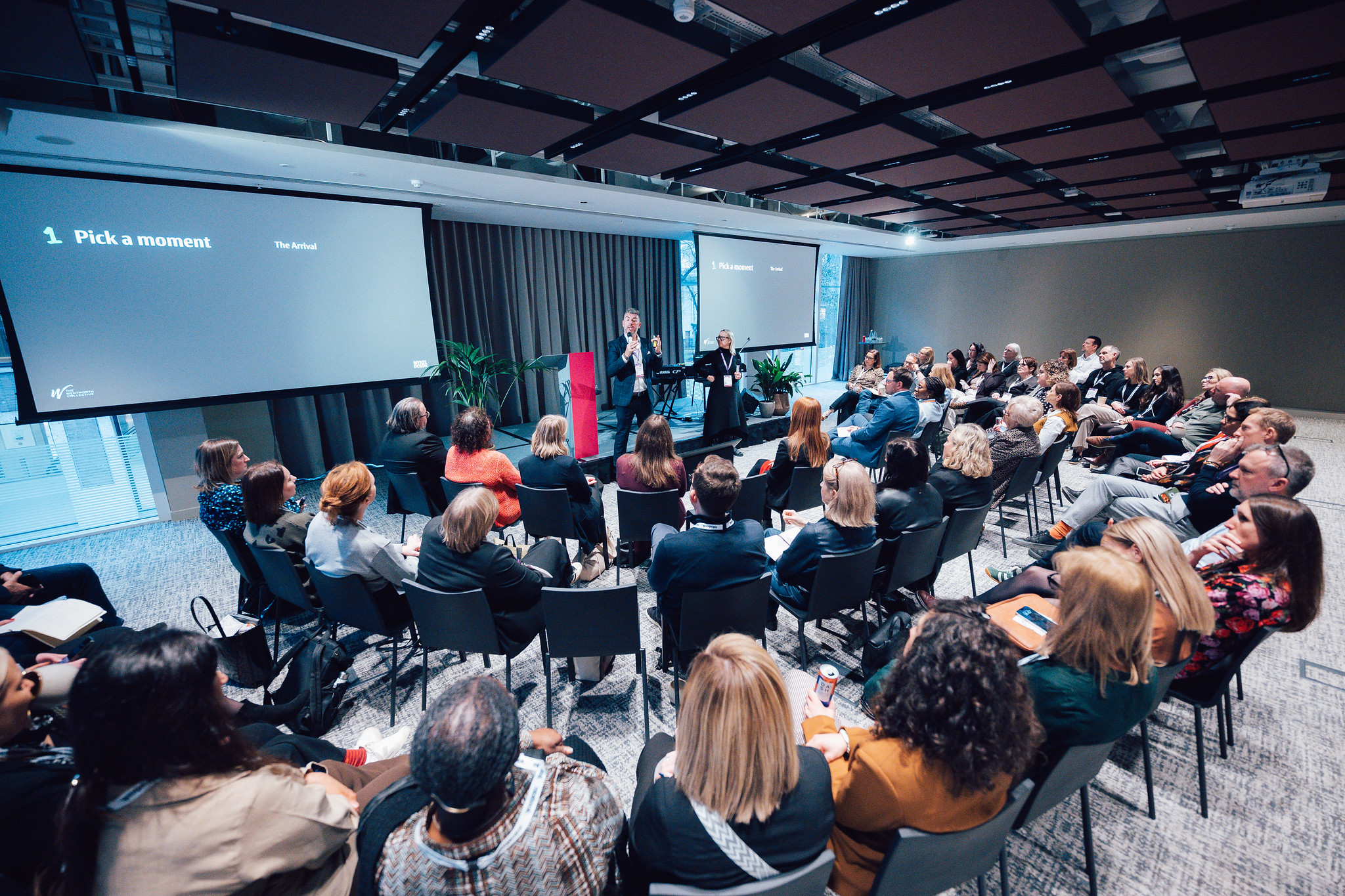
A key takeaway was that none of this requires bigger budgets. In their own session, Dixon and James rearranged chairs to feel more like a living room. Added plants. Introduced handwritten cards. Created curiosity with envelopes on seats. These were small design choices that created an emotional shift.
Final takeaway
As Dixon closed his keynote, he left the room with a clear message: the world doesn’t need more events. It needs better ones.
Experiences designed for people first, creating space for connection, courage and creativity.