
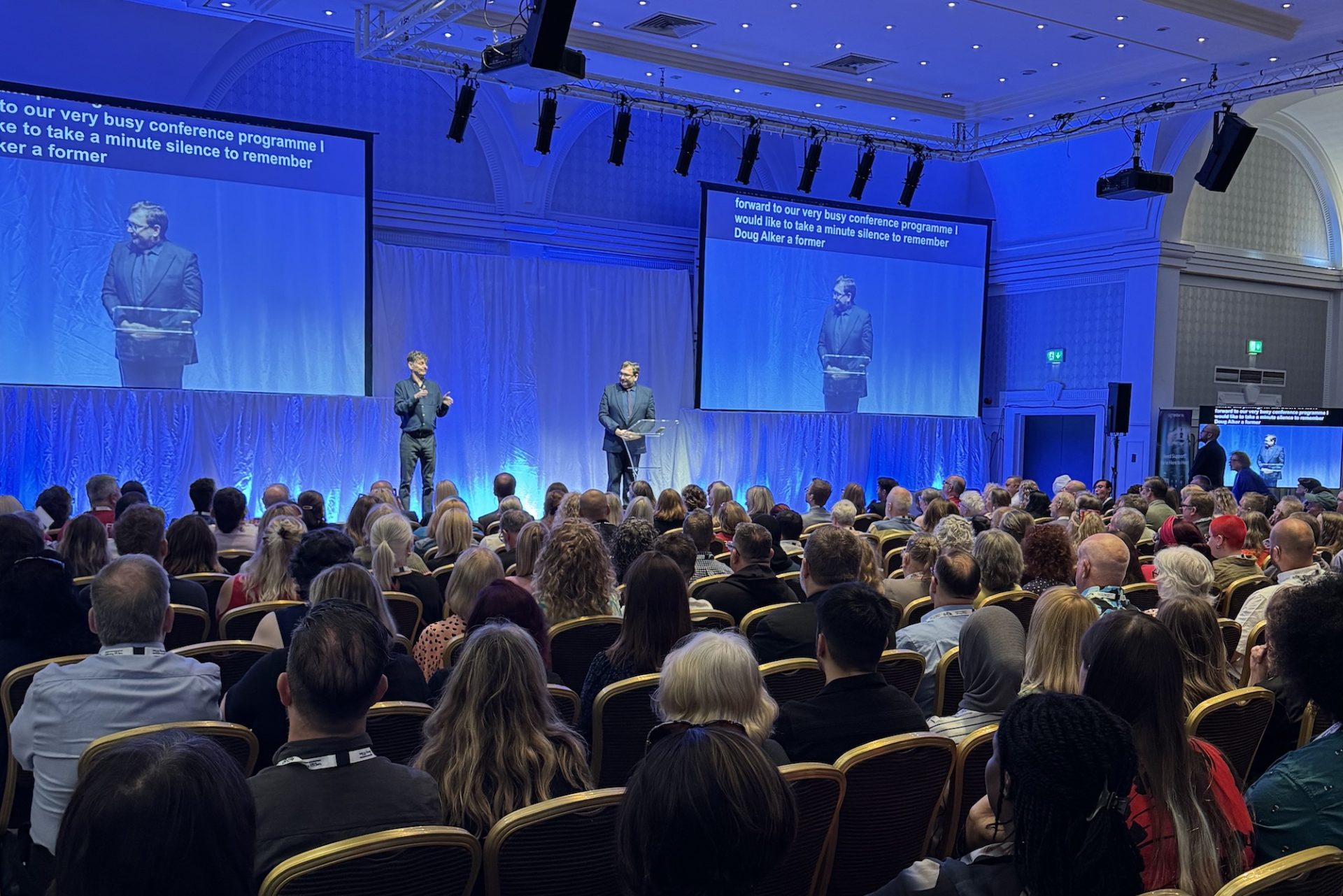
Inclusion shouldn’t be a bolt-on; it should be built-in. Yet too often, accessibility in events is treated as an afterthought rather than a design principle. When the British Deaf Association (BDA) turned 135, the charity turned to First Event to design a celebratory event to mark the milestone.
Not just a celebration of history but a statement of the future. A demonstration that accessibility and ambition can coexist beautifully.
The team designed an experience that didn’t just include Deaf and hearing audiences; it centred on both, resulting in a powerful two-day conference and gala that’s now being hailed as a blueprint for accessible, inclusive events.
The Challenge: Beyond Compliance
The BDA’s vision was bold:
– Bring together hundreds of Deaf and hearing delegates from around the world to celebrate deaf culture, language and community.
– Deliver a seamless, inspiring, and truly accessible experience for everyone, no compromises.
That meant not just interpreters or captions, but an entire event designed around how people experience communication. From the production setup to the networking spaces, inclusivity had to flow through every touchpoint.
And with over 30 speakers, five rooms running simultaneously, and a gala evening to finish, the event had to strike the perfect balance between technical precision and human connection.
The Solution: Accessibility as Design DNA
First Event built the event around three pillars: accessibility, engagement, and celebration.
1. Accessibility wasn’t an add-on — it was the foundation.
Every session included BSL and ISL interpreters, live captions, and induction loops. Visual content was carefully crafted for Deaf and hard-of-hearing delegates, while voiceovers and clear sightlines supported those with low vision.
The team worked together with BDA to optimise lighting, sound, staging, and interpreter visibility – because inclusion isn’t just about communication, it’s about comfort and confidence.
2. Production powered by purpose.
This wasn’t a small event, and the AV setup reflected that. Simultaneous translation, and real-time captioning required a robust technical backbone, but tech only matters when it enhances connection. Every production decision was made with one question in mind: Will this make the experience better for everyone?
3. A celebration that spoke everyone’s language.
The conference explored the intersections of Culture, Identity, Education, Economy, and Technology, with international speakers including Dr Joseph Murray, Helene Jarmer, and Dr Maartje De Meulder.
But it was the evening celebration that truly captured the spirit of the BDA, with deaf-led performances, a visual exhibition of 135 years of history, and social spaces designed to foster connection across all communities. It wasn’t just accessible; it was alive with shared energy and pride.
The Impact: Raising the Bar for Inclusion
The feedback was overwhelming. Delegates described feeling “seen,” “heard,” and “valued”, in every sense of the word.
For the BDA, this event was more than an anniversary. It was a statement of progress and possibility, proof that accessibility can enhance creativity, not restrict it.
The Takeaway: Build It In, Don’t Bolt It On
There’s a clear shift happening. Accessibility is no longer just an ethical responsibility; it’s a marker of excellence.
The next generation of delegates expects events that reflect the diversity of the world they live in. The brands and organisations leading this change aren’t just doing the right thing, they’re future proofing their reputations.
We’ve entered an era where exclusive events are simply outdated. The events that will stand out are those that invite everyone in, with intention, empathy, and excellence.
So, where do we go from here?
First Event’s Top Tips
– Start with empathy. Before you plan your programme, ask: Who might we be excluding without realising it?
– Embed accessibility from day one: in your brief, your production design, and your content.
– Partner with specialists who can help you get it right. Accessibility is complex, but with the right expertise, it’s transformative.
The BDA’s 135th anniversary wasn’t just a celebration of the past: it was a glimpse of what the future of events could look like.