
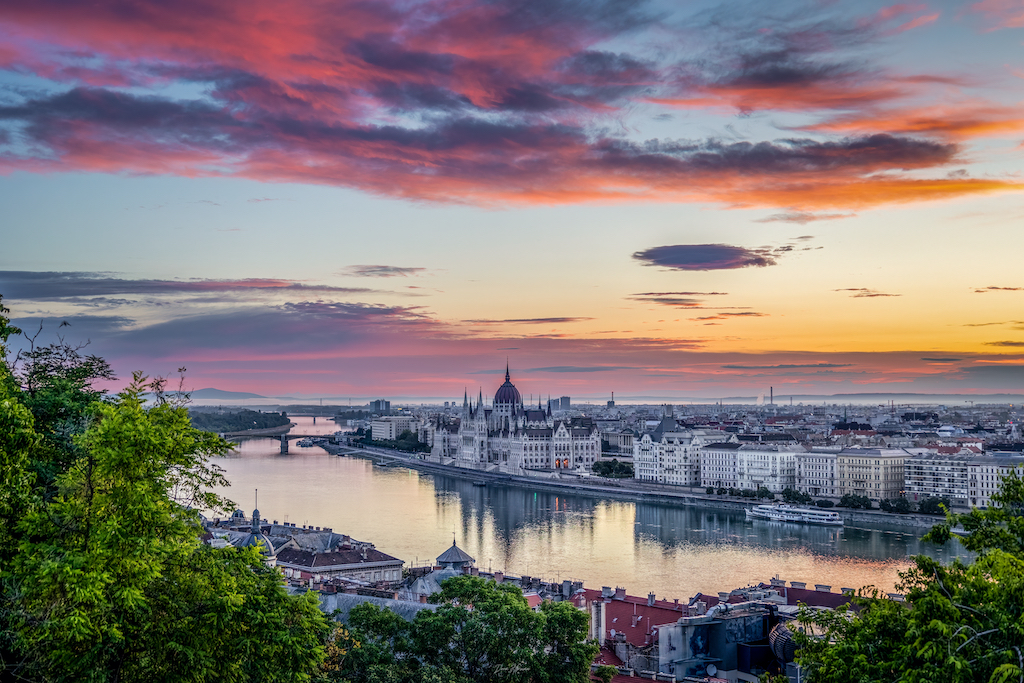
Budapest, the capital of Hungary, is a city where innovation thrives alongside centuries-old traditions. Known for its stunning architecture, thermal baths, and rich history, Budapest has increasingly become a hub for creative industries, tech startups, and cultural innovation, making it a true gem of both the past and the future.
While preserving its historical identity, Budapest has embraced modernisation, and significant investments in infrastructure and services have been made recently, many of them specifically targeting the high-end segment, increasing its appeal as a MICE destination.
Here’s 10 reasons why you should consider the Hungarian capital for your next event…
Easy Access
Located in the heart of Europe, Budapest is easily accessible by air, train, and road. There are direct flight connections to more than 100 destinations across the globe, and it’s just one-two hours from most major European air hubs.
There are three main international railway stations in Budapest, with regular daily trains providing direct links between Budapest and many other European capital cities. The drive from Vienna in Austria takes around two-and-a-half hours. As members of the Schengen Area, you can benefit from seamless and border-free travel experience within the European Union.
Tech Innovation
In recent years, Budapest has gained recognition as an emerging tech hub in Central Europe. The city’s affordable cost of living, highly skilled workforce, and strong educational institutions, such as the Budapest University of Technology and Economics, have fostered a burgeoning startup ecosystem.
World renowned tech companies that have started in Hungary include Prezi, an innovative, zoomable presentation software that allows the creation of visually dynamic and interactive presentations, while Charles Simonyi, the man behind some of the Microsoft’s most successful software, including Word and Excel, is a Hungarian native.
Other innovations that originated in Hungary include the Rubik’s Cube, glass-reinforced concrete, the first small satellite and many more. So, there’s no better destination to host business meetings and events with a focus on innovation.
Sector expertise
The Hungarian government has invested in sectors like IT, healthcare, biotech, fintech, and artificial intelligence, meaning Budapest has plenty of local sector expertise for meeting and event planners to tap into.
This has led to the city being chosen to host several significant events, conventions, and congresses over the past two years including the European Academy of Neurology (EAN) Congress 2023, which brought around 6,000 to 8,000 participants to Budapest, focusing on the latest neurological research and advancements.
The ESGCT (European Society of Gene & Cell Therapy) Spring School took place at the HUN-REN Natural Sciences Research Centre in April 2024, while the DistriPress Annual Congress brought together global press distribution professionals to update industry knowledge and network in September.
Cultural Creativity
Budapest is a centre for creativity, particularly in design, fashion, and film. Its vibrant cultural scene blends traditional Hungarian arts with modern influences.
The city hosts many creative festivals, including the Budapest Design Week and Sziget Festival, one of Europe’s largest music festivals. The city’s ruin bars, converted from old buildings into eclectic nightlife venues, symbolise Budapest’s ability to marry the old with the new in creative ways.
Memorable experiences
Budapest’s magnificent opera house, the Hungarian State Opera House is a UNESCO World Heritage Site and the crown jewel of Andrássy Avenue. Enjoying an opera here is a truly uplifting and memorable experience. Lovers of fine art exhibitions can visit grandiose historical sites such as the Hungarian National Gallery in Buda Castle or the Kunsthalle and Museum of Fine Arts which adorn Heroes’ Square.
Strolling around both the Buda and the Pest sides is a great experience thanks to the city’s eclectic architecture, which boasts numerous beautiful monuments from the different historical periods. Roman remains and still functional Turkish Baths, Classicist, neo-Renaissance and Art Nouveau architectural works line Budapest’s streets.
Culinary Invention
The city’s culinary scene is another area where tradition meets innovation. Hungarian cuisine, known for dishes like goulash and chimney cakes, is celebrated in both traditional restaurants and modern, experimental dining establishments.
Budapest is home to Michelin-starred restaurants that are reinventing Hungarian cuisine using contemporary techniques, blending flavors that respect tradition while pushing culinary boundaries.
Growing Hotel Portfolio
Budapest boasts 22,700 hotel rooms, with 4,083 rooms available in five-star accommodations and 12,699 rooms in four-star establishments. In 2023 alone, the city added 1,012 new hotel rooms to its inventory. Looking ahead, Hungary plans to introduce an additional 4,400 new hotel rooms across the three, four, and five-star categories by 2025, further enhancing the hospitality sector’s capacity.
New properties include the W Budapest, which opened in the historic Drechsler Palace, previously home to the Institute of Ballet Located on Andrássy Avenue, a UNESCO World Heritage Site right in front of the Budapest Opera House. Dorothea Hotel is in the heart of Budapest in a block of three buildings of different ages and styles, named after Maria Dorottya, Archduchess of Württemberg, an influential public figure of the 1800s. St Regis is also expected to open soon, and the Mandarin Oriental chain is expected to enter the Budapest market in 2027.
Spa & Wellness
One of Budapest’s unique contributions to European tradition is its renowned thermal baths. With more than 100 hot springs beneath the city, it has long been called the Spa Capital of the World and a center for thermal therapy since Roman times.
Today, these baths, like the famous Széchenyi and Gellért Baths, not only represent a connection to tradition but also support wellness tourism. Given the increasing focus on wellbeing in meetings and events, Budapest is the perfect destination for event planners that want to incorporate a wellness element into their program.
After Dark Activities
The capital offers a vibrant and diverse nightlife scene, catering to a range of tastes and preferences. District VII, also known as the Jewish Quarter, is particularly famous for its lively nightlife, with numerous bars, pubs, and clubs lining the streets.
The city offers a wide variety of entertainment options, including live music venues, jazz clubs and skybars. The city also hosts popular boat parties on the Danube River, allowing visitors to enjoy music, drinks, and stunning views of Budapest’s illuminated landmarks.
Greater Budapest
The wider surroundings of Budapest boast more than just a couple days of sights; you can head north to the picturesque Danube Bend, west to the heart of the nearest wine district, Etyek, or east to Gödöllő, characterised by its gorgeous Royal Palace.
The Danube Bend, north of the capital, is a popular excursion destination thanks to its stunning natural environment. Szentendre is often referred to as the town of artists, which is perfectly exemplified not only by its numerous museums and the artists who live and work here, but also by its noticeably Mediterranean, bohemian atmosphere
Noémi MolnarSales Manager at Budapest Convention BureauE: [email protected]: https://budcb.hu/
The Budapest Convention Bureau supports planners with organising conferences and business events coming to the Hungarian capital with comprehensive professional services through its team of experts, membership, and high-level contacts in the scientific, economic and public sectors.